
A simulation-first approach is quickly becoming non‑negotiable in biopharma facilities – both greenfield and brownfield projects. It is one of the few levers that can simultaneously de‑risk capex, compress timelines and stabilise operations over a facility’s entire lifecycle.
Why simulation belongs in every biopharma toolbox
Biopharma facilities are complex networks that include reactors, buffer systems, CIP/SIP cycles, utilities, cleaning strategies, human workflows, and more. Small design choices early on can lock in bottlenecks, under‑utilised assets and unnecessary costs for years. Traditional design approaches rely on static spreadsheets, rules of thumb and a handful of worst‑case assumptions. Once steel is ordered and equipment is installed, course correction becomes slow and expensive. Process simulation is a game-changer that lets you explore and test options in a virtual environment before committing in the real world.
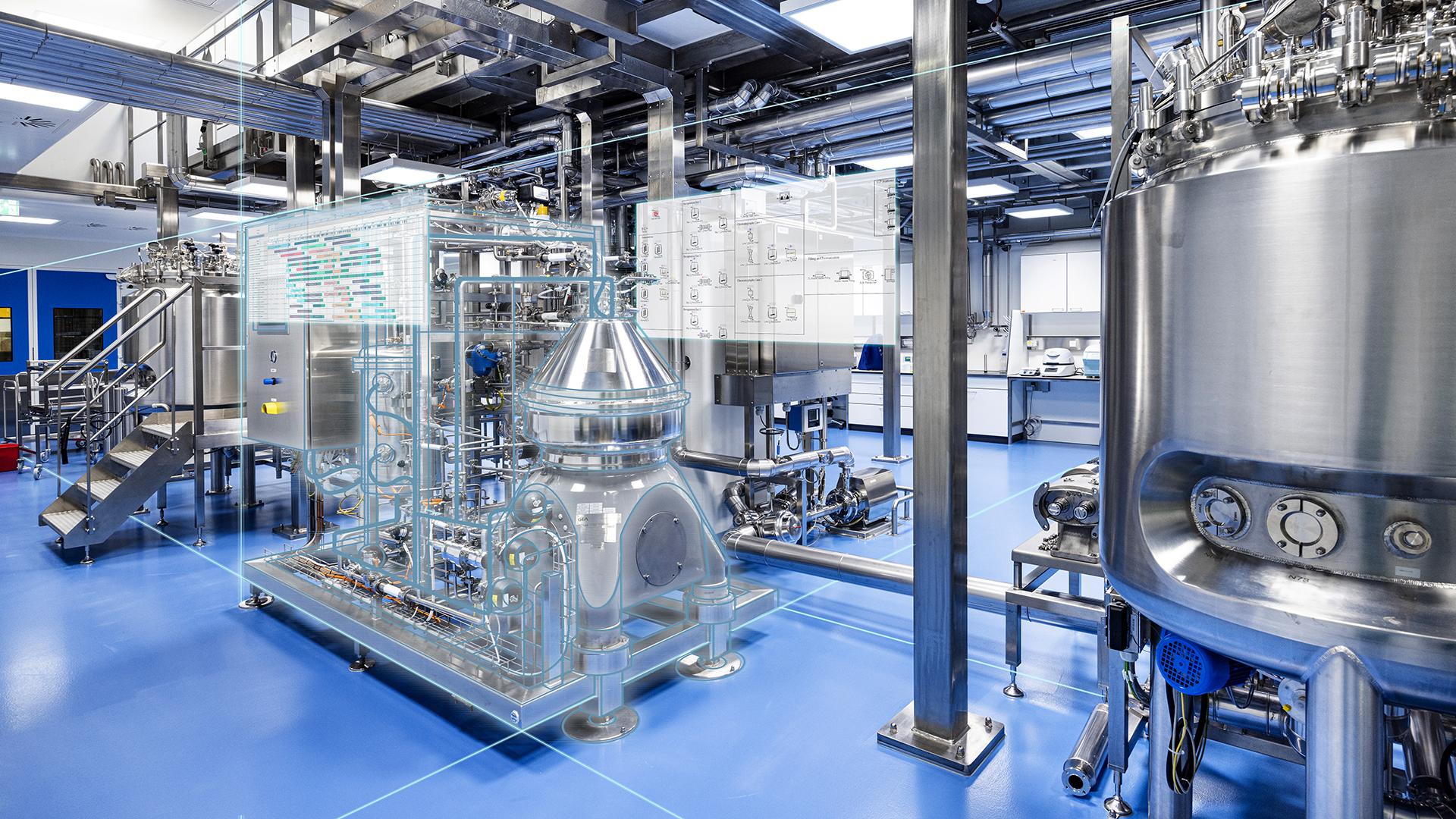
Modern simulation tools create a dynamic digital twin of your production – batches, recipes, equipment, utilities, cleaning, staffing and maintenance – and let you stress‑test “what if?” scenarios before they impact the shopfloor. That gives engineering, operations, and finance a shared, fact‑based view of capacity, risk and trade‑offs.
What a simulation tool actually does in biopharma facilities
1. Design smarter facilities and lines
During concept and basic design, a process simulator lets you build a time‑based model of your processes and equipment. You can then ask questions such as:
- What is the actual bottleneck across upstream, downstream and support systems (buffers, WFI, CIP/SIP)?
- How many reactors, centrifuges, or chromatography skids do we need to achieve the required annual throughput?
- Does this layout support realistic cleaning cycles and changeovers without hidden downtime?
With INOSIM’s process simulation at the core of ZETA’s digital toolbox, teams can map recipes, unit operations and utilities in detail and run multiple design variants before choosing a path. Case studies have shown that simulation can reveal options with fewer steps, lower investment, and significantly reduced operating costs compared to the initial process concept.
The “simulate first, engineer smarter” approach supports:
- Leaner capex: avoiding over‑dimensioned equipment and unnecessary parallel lines.
- Faster projects: avoidance of late re‑designs, clearer specs, shorter commissioning.
- Better lifetime fit: designs that anticipate future products and capacity ramps instead of only today’s molecule.
2. Optimise existing plants without disrupting production
Simulation is not just for greenfield projects. For running facilities, a tool like INOSIM lets you build a digital twin of your current operation – with actual recipes, changeover times, utility constraints and cleaning regimes. You can then experiment with:
- Debottlenecking: What happens if we change campaign sequences, shift patterns or cleaning strategies?
- Capacity expansion: Can we meet forecasted demand with existing assets plus smarter scheduling, or do we genuinely need additional equipment?
- Energy and resource optimisation: How do different buffer strategies, CIP timings or utility configurations affect consumption and costs?
Because everything happens in a virtual environment, you can explore a variety of options safely – without touching a live batch – and implement only those changes that demonstrably improve throughput, service level and cost.
3. Bring predictability into day‑to‑day production
The next step beyond design‑time simulation is predictive production management. INOSIM Foresight, integrated into ZETA’s digital value chain, uses simulation in near‑real time to forecast how today’s decisions will affect tomorrow’s output.
By feeding current batch data, planned campaigns and equipment status into the model, operations teams can:
- See the impact of delays, unplanned downtime or rush orders on the whole schedule.
- Test “what if?” changes (e.g., re‑prioritising a batch, moving maintenance windows) before making them.
- Optimise shift planning, cleaning, and maintenance for the following days and weeks, rather than reacting to problems as they arise.
This kind of foresight turns planning from a static exercise into a continuous, data‑driven process – helping facilities remain agile and resilient even under volatile demand or tight timelines.
When should you consider a simulation tool?
A dedicated process simulation tool becomes especially valuable when:
- You’re designing a new biopharma facility or expanding capacity and need to avoid over‑ or under‑design.
- You’re facing frequent schedule conflicts, bottlenecks or unexplained waiting times between steps.
- You’re planning product transfers or multi‑product campaigns and need confidence about feasible sequences and capacities.
- You’re under pressure to improve OEE, reduce energy use or integrate new technologies without destabilising operations.
In each case, simulating first allows you to quantify options, discuss trade-offs using shared numbers, and de-risk decisions long before they show up in the plant.
“INOSIM impresses with powerful features, including an intuitive graphical interface, flexible VBA programming, automated reporting functions, and impressive simulation performance. These features open up almost unlimited possibilities for capacity analysis in the pharmaceutical industry. In short: INOSIM offers endless possibilities – the rest is up to the user.”
Dennis Meister
Product Specialist Corporate API Production
Octapharma
Simulate first. Engineer smarter. Operate with confidence.
Biopharmaceutical production will only get more complex: more modalities, more products per site, tighter timelines, stricter sustainability and cost targets. Relying purely on static planning or past rules of thumb is increasingly risky.
Process simulation offers a way to step ahead of that complexity. By combining ZETA’s engineering and biopharma domain expertise integrated with INOSIM simulation platforms, organisations can design and operate facilities that are not just compliant and productive today, but genuinely prepared for what comes next.
For production, engineering and digital teams exploring their next project or optimisation initiative, the question is no longer “Can we afford to invest in simulation?” It is increasingly “Can we afford not to?”