If your goal is steady output, consistent quality, and fewer start–stop disruptions than batch processing, a continuous stirred tank bioreactor (CSTR) can be a reliable route. Once the process is stable, the product stream can be held close to steady state—reducing the “transient swings” that often appear at the start and end of batch runs. For highly complex bioprocessing programmes, that steady-state advantage is exactly why CSTR thinking shows up again and again: it gives you a controlled way to study kinetics, optimise conditions, and maintain a predictable operating window.
This guide explains what a continuous stirred tank reactor is (and why bioprocessing uses the same concept), the core working principle, key design elements, where CSTRs fit best, and what to check before you commit.
What is a continuous stirred tank bioreactor?
A continuous stirred tank bioreactor—often shortened to CSTR (plural: CSTRs)—is a stirred-tank reactor operated with continuous flow. Fresh feed enters through an inlet at a defined flow rate, and culture broth leaves through an outlet at the same flow rate, so the reactor volume (working volume) stays roughly constant.
In chemical engineering, this is a standard chemical reactor concept (also called a mixed flow reactor). In bioprocessing, the same reactor technologies are used to run a biochemical process (for example, fermentation) under continuous operation. The key idea is simple: constant inflow/outflow, combined with continuous mixing, aims to keep conditions well-mixed and stable throughout the reactor.
A common continuous CSTR set-up is a chemostat:
- Reactants (fresh medium/substrate) are continuously fed.
- Products are continuously removed in the outlet stream.
- The dilution rate sets the pace of the culture.
How a CSTR works: the core working principle
A CSTR relies on the relationship between flow, volume, and how quickly biology (or chemistry) can respond.
Dilution, residence time, and residence time distribution
Two core terms define CSTR behaviour:
- Dilution rate (D) = Flow rate / Working volume
- Residence time (τ) = 1 / D
Residence time tells you how long material spends inside the reactor on average. In real continuous systems, what matters is not only the average but the residence time distribution (RTD)—some material may leave earlier or later depending on mixing and flow paths.
The perfect mixing assumption (and what it means)
CSTR design often assumes perfect mixing—an ideal limit of complete mixing in reactor design where the contents are perfectly mixed. Under this assumption:
- Material entering is instantaneously and uniformly mixed throughout the reactor.
- The output composition is identical to the composition of the bulk liquid inside the reactor.
That assumption is useful because it gives clear equations and simple control logic. However, real reactors behave ideally but instead fall somewhere between ideal mixing and imperfect mixing. In practice, baffle design, impeller selection, viscosity changes, gas holdup, and scale all influence mixing limits of an ideal “well-mixed” reactor.
Steady state in biological systems
At steady state, the culture aims to stabilise:
- Biomass (microorganism concentration) remains roughly stable.
- Substrate and by-product concentrations stabilise.
- Product formation becomes more predictable.
In many microbial chemostat cases, steady state requires growth to balance dilution. If dilution is too high, washout occurs (cells are removed faster than they can multiply).
CSTR vs plug flow reactor (PFR) and other flow reactors
In reaction engineering, CSTRs and plug flow reactor (PFR) set-ups are two core flow reactors models:
- CSTR (mixed flow reactor): conditions are well-mixed; the outlet matches the bulk liquid.
- PFR (plug flow): conditions change along the flow path; there is ideally no back-mixing.
A useful practical bridge is stirred tanks in series (reactor in series). A cascade of CSTRs (cascades of CSTRs) can behave more like a PFR, narrowing the residence time distribution and reducing back-mixing. In bioprocessing, this “reactors in series” concept can be used to shape performance—especially where reaction kinetics (or microbial growth kinetics) respond strongly to concentration profiles.
Key design elements of a continuous stirred tank bioreactor
A CSTR shares many fundamentals with a batch stirred tank, but continuous operation makes some elements more critical.
Vessel, agitation, baffles, and continuous mixing
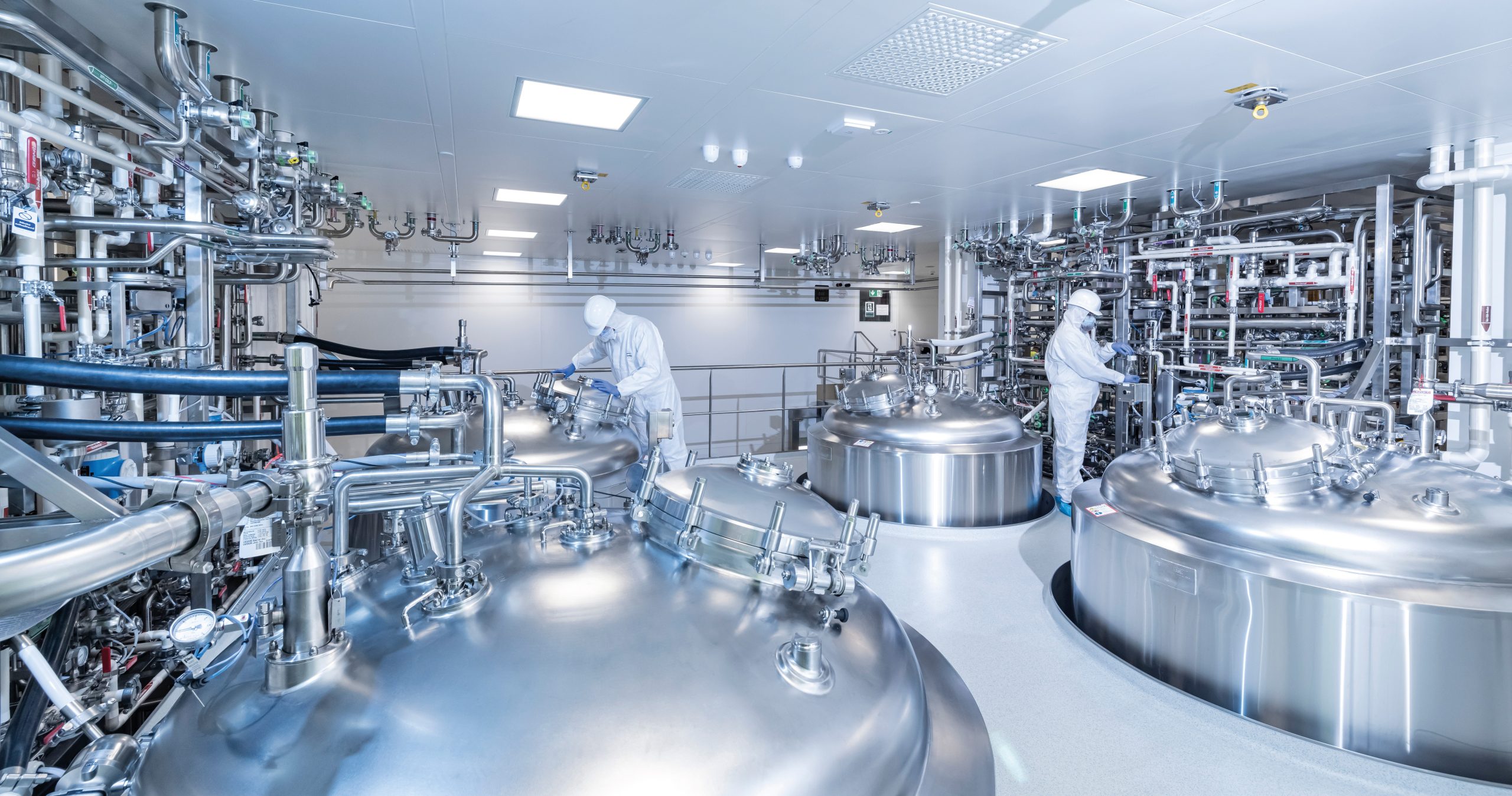
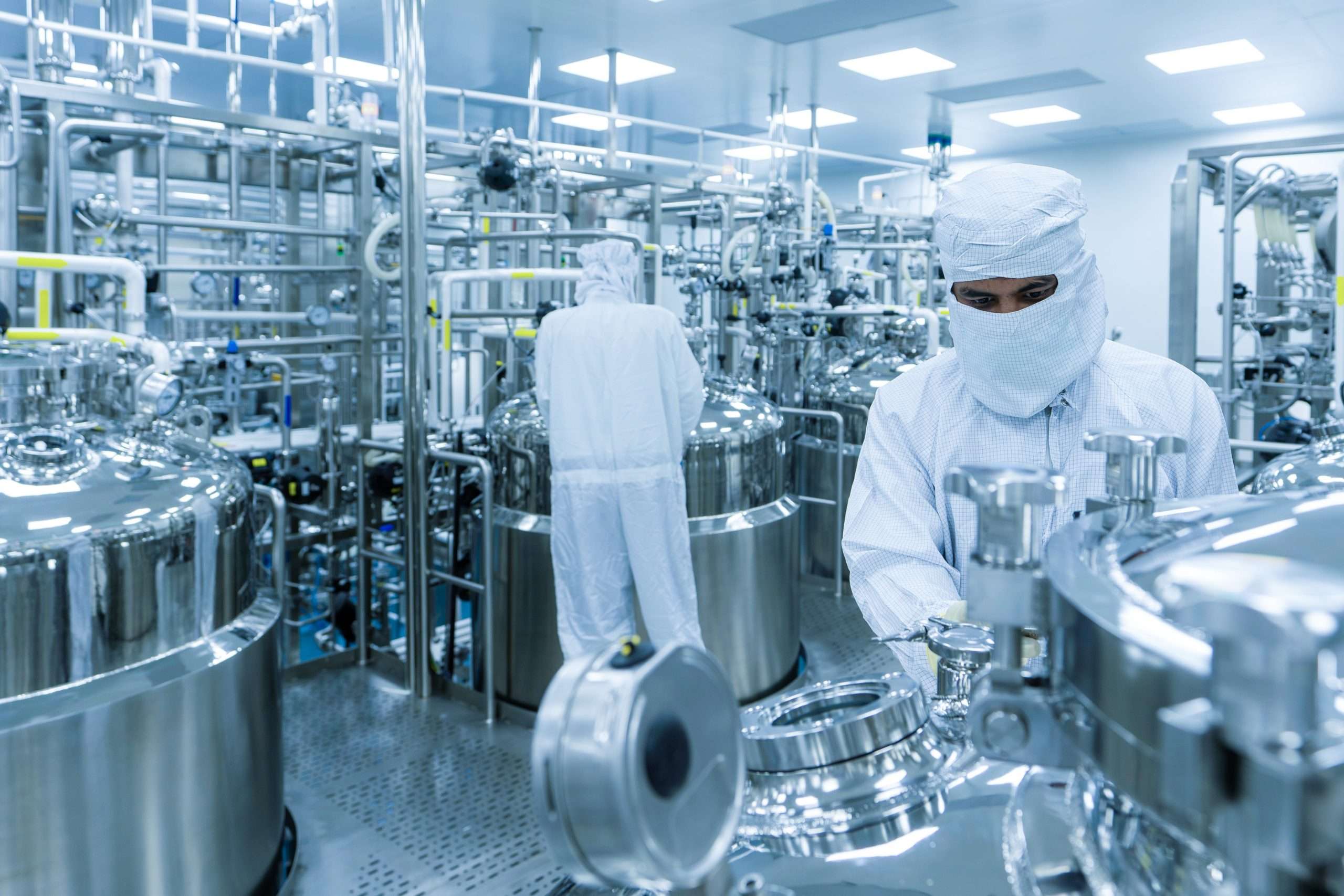
A continuous stirred tank bioreactor relies on continuous mixing to keep the system uniformly mixed throughout the reactor. The stirrer (agitator) and impeller generate bulk circulation, while baffles reduce vortexing and improve mixing efficiency.
Good mixing does two things:
- Helps maintain a homogeneous bulk liquid and even distribution of nutrients.
- Helps facilitate rapid dilution of feed additions, reducing local hot-spots and stress events.
Mass transfer and oxygen transfer
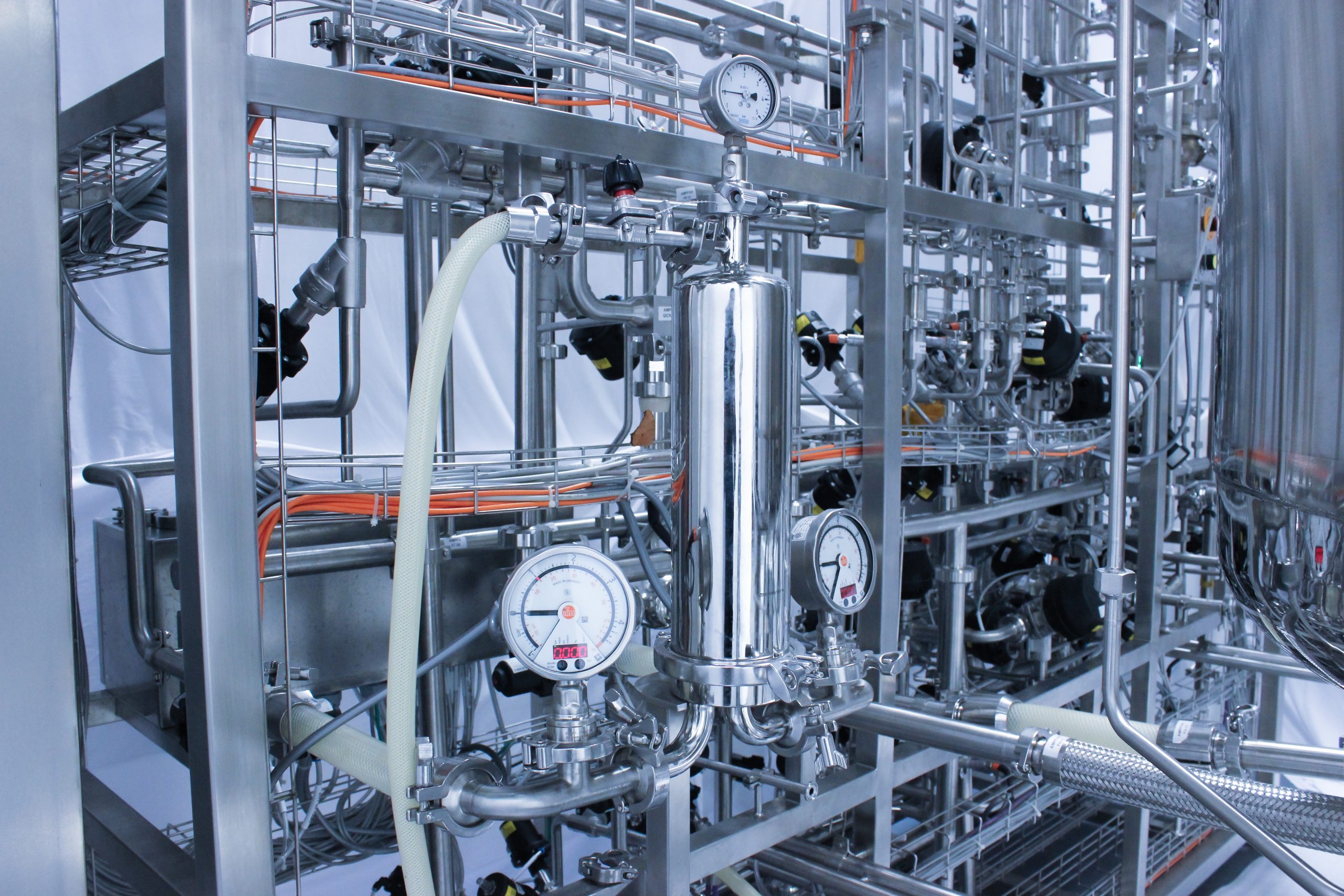
For aerobic microbial fermentation, mass transfer—especially oxygen transfer—can be the limiting factor. Aeration, bubble dispersion, and agitation must meet oxygen demand without driving excessive foam or shear. In these cases, the CSTR is both a biochemical reactor and a gas–liquid reactor, so mixing and aeration design must be treated as a package.
Temperature and pH: precise control over long runs
Because CSTRs are designed for long, stable operation, temperature and pH control must be reliable. Small drifts over time can shift reaction kinetics, cell metabolism, and product formation. Stable temperature control and responsive pH control therefore become core requirements—not optional extras.
Feed, outlet stream, and flow control
CSTR performance depends on stable flow control:
- Reactants (substrate/reagent in the broad sense) are continuously fed.
- The outlet stream removes reactants and products together with biomass and broth.
- Inflow must match outflow to hold reactor volume constant.
Many continuous failures are not biology failures, but flow control errors—pump drift, blockage, or poor calibration.
Sterility, contamination control, and operational discipline
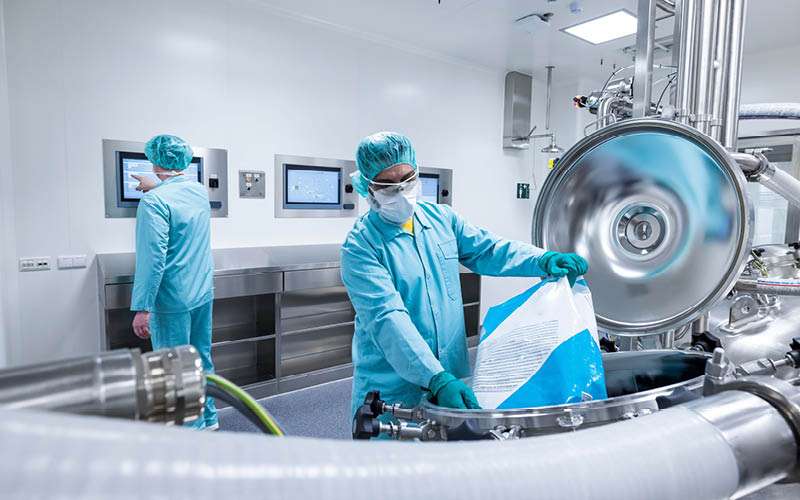
Long connected run times increase contamination exposure. For bioprocessing, aseptic design, validated sterile barriers, and disciplined sampling matter more than in batch. In industrial-scale systems, cleaning and sterilisation strategy and safe containment are also a bigger part of the CSTR decision.
Where CSTRs are used
CSTRs are widely used in industrial processes where continuous operation gives a clear advantage.
- Microbial fermentation: robust microbial processes (bacteria/yeast) where steady-state operation can deliver a consistent product stream.
- Wastewater treatment and environmental treatment processes: many wastewater and waste water systems use CSTR-like reactors because influent is continuous by nature.
- Anaerobic digestion and biogas production: continuous stirred reactors are common in digestion of organic loads, including sludge digestion, where the aim is stable conversion and production of biogas.
In biopharma upstream, true continuous stirred-tank cell culture is less common than fed-batch, but continuous concepts are increasingly used in intensified approaches and in continuous-like strategies (for example, perfusion with retention).
Advantages for customers
When engineered and operated correctly, a CSTR can offer practical advantages:
- Consistent product stream and more stable product quality by operating near steady state.
- Precise control of key parameters (flow, dilution, temperature and pH) over long campaigns.
- Higher utilisation because the reactor spends less time in fill/empty/turnaround.
- Clear process understanding: steady state makes it easier to analyse kinetics and optimise conditions.
- Scalable operation for robust microbial and environmental applications that require continuous flow.
Limitations and trade-offs
Continuous systems also bring real operational constraints:
- Contamination risk accumulates over time; sterility and discipline are critical.
- Washout risk exists if dilution exceeds the organism’s growth capability.
- Mixing is never perfectly ideal: real systems can develop gradients, especially at larger reactor volume, higher viscosity, or high gas rates.
- Change management is harder: switching feed lots, changing setpoints, or responding to drift can destabilise steady state.
How to choose the right continuous stirred tank approach
A process-led specification avoids most downstream surprises.
- Confirm the biology fits continuous operation Fast-growing, robust microorganisms are often better suited to single CSTR operation. Slower or more sensitive systems may require retention or a different continuous strategy.
- Define dilution rate and steady-state targets Set the flow rate and expected operating point. Define alarm limits and actions if the process drifts.
- Engineer mixing and mass transfer for the real worst case Mixing, oxygen transfer, foam, and heat removal limitations do not disappear in continuous mode—they can become more visible.
- Decide whether you need reactors in series If residence time distribution matters, consider stirred tanks in series to reduce back-mixing and shape performance closer to plug flow behaviour.
- Design sterility and monitoring as first-class requirements Long runs amplify small weaknesses. Stable sensors, calibrated pumps, and disciplined sampling protect the campaign.
Conclusion
A continuous stirred tank bioreactor is a well-mixed reactor operated with continuous inflow and outflow, designed to maintain steady-state conditions for consistent output. Its strengths—stable quality, high utilisation, and precise control—make it a strong fit for robust microbial fermentation and for wastewater and anaerobic digestion applications where continuous flow matches the operational reality. The key is a tailor-made design that treats mixing, dilution control, and contamination protection as core requirements, because long runs amplify small weaknesses. When the biology and the plant are aligned, CSTRs can be a reliable foundation for scalable continuous bioprocessing.