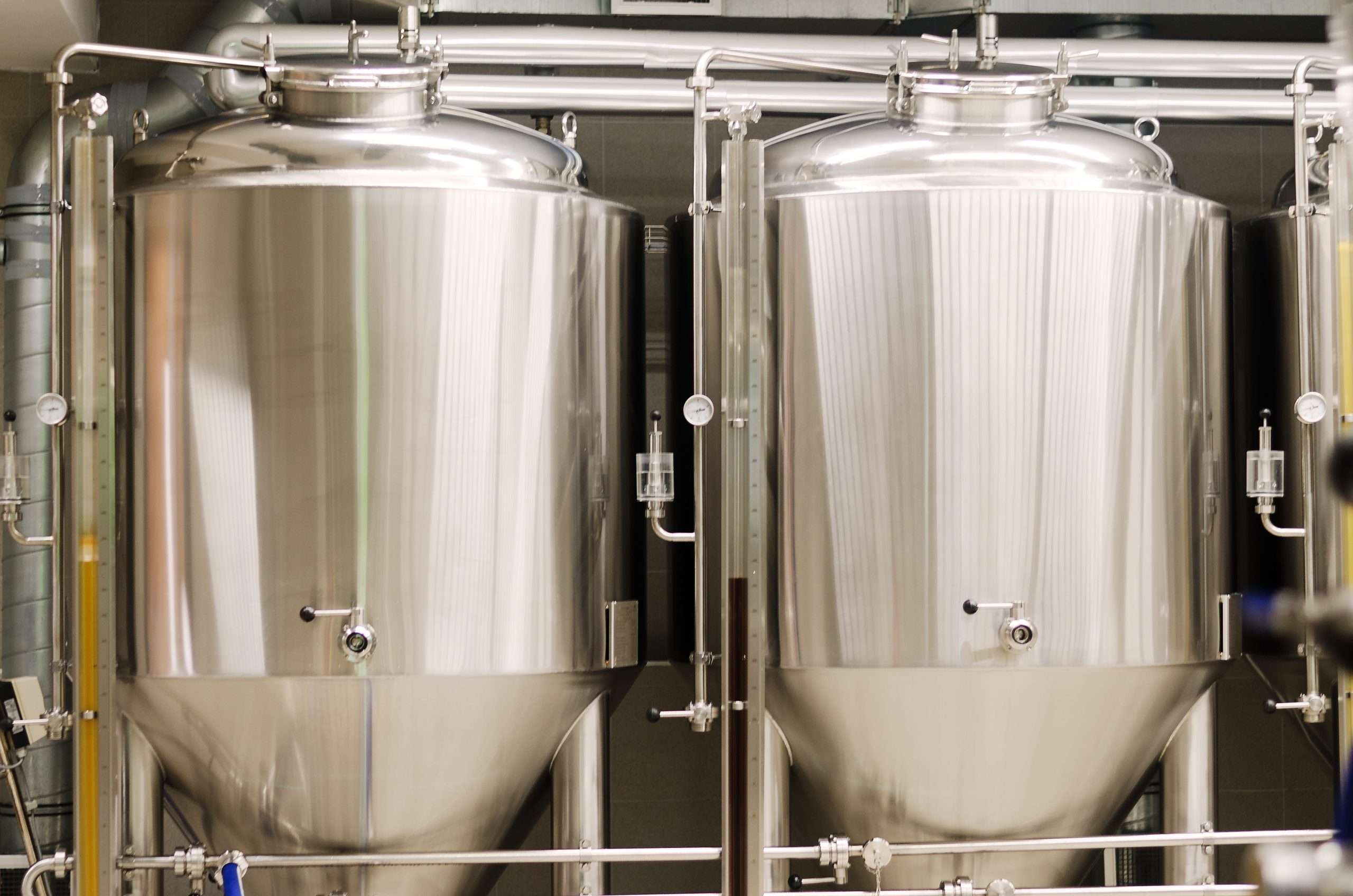
Not every fermentation needs an impeller. In many aerobic runs, the real job is to move gas through a liquid phase efficiently—while keeping the vessel easy to clean, easy to maintain, and mechanically simple. That’s where the bubble column fermenter earns its place: it uses rising bubbles to provide mixing and gas–liquid contact, with very few moving parts to worry about.
A bubble column fermenter (often described more broadly as a bubble column reactor) is a vertical, cylindrical reactor where gas is injected at the bottom of the column and rises through the broth in the form of bubbles. Below, you’ll find what it is, how it works in practice, where it fits best (including fermentation and biological wastewater treatment), what to watch for, and how to specify a tailor-made system for your process window.
What is a bubble column fermenter?
A bubble column fermenter is a multiphase reactor—specifically a gas–liquid contactor—where the gas phase is sparged into the liquid through a gas distributor (sparger/distributor). As gas is sparged, bubbles rise and create circulation and turbulence, which performs two jobs at once:
- It provides mixing (circulation and dispersion of nutrients, cells, and heat), helping keep the broth reasonably homogeneous.
- It drives gas–liquid mass transfer (for example, oxygen transfer into the broth and CO₂ stripping out).
Unlike a stirred-tank fermenter, the bubble column has no agitator, stirrer shaft, or mechanical seal inside the reactor. That reduction in moving parts is a practical benefit in long campaigns where maintenance and hygienic reliability matter.
A note on “reactor” use in chemical engineering
In chemical engineering, bubble column reactors are also used as chemical reactor technologies for chemical processes involving reactions—such as oxidation, hydrogenation, alkylation, chlorination, polymerisation, and some gas conversion routes (including synthetic fuels, process-dependent). In those cases they may be run with a catalyst (including slurry bubble and three-phase operation, process-dependent). The core physics is the same: hydrodynamics, heat and mass transfer, and interfacial area control.
How a bubble column fermenter works
A bubble column looks simple, but its performance is set by hydrodynamics and heat and mass transfer inside the reactor.
Gas injection, sparger type, and bubble formation
Gas enters through a sparger or distributor at the base. Sparger type (ring, plate, porous/sintered, nozzle) influences the initial bubble size distribution, which strongly affects mass transfer.
- Smaller bubbles generally increase interfacial area and can improve oxygen transfer.
- Larger bubbles rise faster and can reduce contact time, sometimes lowering transfer efficiency.
Bubble size is often described using a characteristic bubble diameter, such as the Sauter mean diameter (d32), because it links directly to available interfacial area for transfer.
Flow regimes, gas holdup, and mixing
As bubbles rise, they reduce the average density of the gas–liquid mixture in the centre of the column. This creates buoyancy-driven circulation: a two-phase (gas + liquid) core moves upward while liquid returns downward along the wall. The resulting mixing characteristics depend on operating conditions and design parameters such as:
- Superficial gas velocity (often used to compare gas rates across different scales)
- Column diameter (and overall height-to-diameter ratio)
- Broth physical properties (viscosity, surface tension, biomass concentration)
As gas rate increases, bubble columns can shift between flow regimes (for example, bubbly flows to more heterogeneous flow). That shift changes gas holdup (the volume fraction of gas occupied by the gas within the reactor) and can change how uniformly mixed the broth remains throughout the vessel.
Oxygen transfer: kLa, mass transfer coefficient, and what drives it
For aerobic fermentation, oxygen transfer is often the main design constraint. In bubble columns, oxygen transfer is commonly described by kLa (the volumetric mass transfer coefficient). In simple terms:
- “kL” reflects the liquid-side mass transfer coefficient.
- “a” reflects interfacial area (how much bubble surface area is available in the liquid).
kLa is influenced by bubble diameter (and bubble size distribution), gas holdup values, gas flow rate, broth properties, and pressure. Because gas rate also contributes to mixing, changing aeration can affect both oxygen transfer and how homogeneous the culture remains.
Heat transfer and temperature control
Fermentation can be strongly exothermic, particularly during rapid growth. Bubble columns typically use external jackets, internal coils, or external heat-exchanger loops for temperature control. With without mechanical agitation to boost circulation on demand, heat transfer design and sensor placement matter more—especially at large scale, where temperature gradients can appear if circulation weakens.
Key components in a bubble column fermenter
Even a mechanically simple fermenter still depends on careful engineering details.
Vessel and geometry
Bubble columns are commonly tall, cylindrical vessels. Height influences bubble residence time, while column diameter affects gas holdup, circulation patterns, and residence time distribution. Many designs use a higher aspect ratio than a stirred tank because height is part of how the system generates mixing and mass transfer.
Material choice is typically stainless steel at industrial scale, with hygienic finishes and a design that supports CIP/SIP where sterility is required.
Gas distributor, spargers, and gas train
The sparger is central. Typical gas distributor designs include perforated rings, plates, or porous elements, selected to disperse gas effectively without excessive fouling. In many biochemical processes such as fermentation, sparger performance changes over time due to deposits, so cleaning access and fouling tolerance should be specified up-front.
Off-gas and foam handling
Aerated fermentation produces significant off-gas. A practical bubble column set-up typically includes:
- Sterile exhaust filtration
- Condensation management (to protect filters)
- Pressure control (process-dependent)
- Foam detection and response strategy
Because gas rates can be high, foam control and exhaust capacity are not “nice to have”—they are core to stable operation.
- Heat-transfer system
Jackets and/or coils remove metabolic heat. The system should be sized for worst-case heat-load, not average conditions. Temperature control becomes especially important if the process is sensitive to small deviations.
Instrumentation and control
Even without an agitator, bubble column fermenters still need reliable monitoring:
- Temperature
- pH
- Dissolved oxygen (for aerobic processes)
- Gas flow (air/oxygen) and pressure (where used)
- Foam detection (process-dependent)
Control strategies often use cascades (for example, DO control by adjusting gas flow rate, oxygen enrichment, and pressure). In some cases, gas rate is also the main “mixing knob”, so control changes can shift both oxygen transfer and mixing.
Bubble column vs stirred-tank and airlift: what’s different?
Bubble columns are often compared with two neighbouring designs.
Bubble column vs stirred-tank fermenter
- Mechanical complexity: bubble column reactors remove impellers and seals, which can improve reliability and reduce maintenance.
- Power input: stirred tanks can deliver high mixing power and are easier to tune across viscosity ranges; bubble columns rely on gas-driven circulation.
- Shear: bubble columns can be gentler than high-speed stirred tanks, which can suit shear-sensitive cultures.
- Control headroom: stirred tanks often provide more headroom for very high oxygen demand because agitation and gas dispersion can be increased independently.
Bubble column vs airlift fermenter
An airlift fermenter is a refined bubble column that forces a more defined circulation loop (riser and downcomer), often using a draft tube. In many cases:
- Airlifts provide more predictable circulation and reduce dead zones.
- Bubble columns are simpler, but may show more variability in circulation depending on superficial gas velocity and broth behaviour.
If your process demands reliable circulation without mechanical agitation, airlift designs can offer a middle ground.
Where bubble column fermenters are used
Bubble column fermenters are used across multiple sectors when the process fits the gas-driven mixing window.
- Industrial biotechnology: aerobic microbial fermentation where reducing moving parts is valuable and broth viscosity stays manageable.
- Fermentation and biological wastewater treatment (process-dependent): bubble column/aeration reactors are used because continuous gas delivery matches the operational reality.
- Bioprocess development for specific organisms: where lower shear and simple vessel internals reduce damage risk and simplify cleaning.
- Certain fungal and bacterial cultures: especially when mechanical seals are a concern (organism- and process-dependent).
The key is process fit: if viscosity rises substantially, or if solids are heavy and prone to settling, you may need a different configuration (for example, stirred-tank, airlift, or a fluidised bed/packed system, process-dependent).
Advantages for customers
A bubble column fermenter can deliver practical benefits when you need a robust, scalable set-up:
- Reliable operation with few moving parts (no impeller, shaft, or mechanical seal in the vessel).
- Little maintenance relative to mechanically agitated systems, with fewer rotating components to service.
- Solution-oriented simplicity: fewer mechanical variables can make commissioning and routine operation smoother.
- Gentler hydrodynamics for processes that are shear-sensitive.
- Tailor-made scalability for processes that remain within the gas-driven mixing and mass-transfer window.
Limitations and trade-offs to plan for
Bubble columns are not universal. Their limits show up quickly if the process pushes outside the design window.
- Mixing dependence on gas rate: if you need more mixing, you often increase superficial gas velocity, which can increase foaming and off-gas load.
- Oxygen transfer ceiling: very high oxygen demand can require oxygen enrichment, pressure, or alternative designs.
- Viscosity sensitivity: as broth viscosity rises, circulation can weaken and gradients become more likely.
- Foam risk: high aeration rates can create persistent foam, requiring a robust foam strategy.
- Heat-removal challenges at scale: without mechanical mixing, heat-transfer and sensor placement must be engineered carefully.
These are not reasons to avoid bubble columns—they are reasons to specify them around the real broth behaviour across the full run.
How to choose the right bubble column fermenter
A good specification starts with process realities, not vessel preference.
Confirm the organism and broth window
Define expected viscosity range, solids content, and foaming tendency across the run. If the broth becomes highly viscous or shear-thinning, validate mixing performance early because gas-driven circulation can change dramatically.
Define oxygen demand and transfer strategy
For aerobic processes, estimate peak oxygen demand (often late growth). Then choose a transfer strategy:
- Air only (simplest)
- Oxygen enrichment (adds cost and safety considerations)
- Pressure strategy (improves solubility but requires engineered containment)
Make sure the off-gas handling and foam control are sized for worst-case gas rates.
Choose sparger design with cleaning in mind
Sparger performance drives mass transfer, but it is also a fouling surface. Specify spargers that can be cleaned reliably (CIP/SIP compatibility, accessible inspection points, and robust materials) and consider how sparger performance may shift under different operating conditions.
Engineer heat-transfer for peak load
Fermentation heat-load can peak quickly. Size jackets/coils for the worst case and ensure temperature measurement points reflect true bulk conditions.
Specify instrumentation depth that protects consistency
At a minimum, temperature and pH are typical. For aerobic processes, add dissolved oxygen measurement and stable gas-flow control. Foam detection is often worth it in bubble column fermenters because gas rates can be the main driver of foam events.
Align upstream with downstream
Gas rate, antifoam use, and by-product profiles affect downstream recovery. If downstream steps are sensitive (filtration, chromatography, or product stability), treat aeration and foam strategy as end-to-end design variables.
Practical operating tips
A few operational habits improve stability and reduce surprises:
- Ramp gas rates deliberately to avoid sudden foam events and stress.
- Track off-gas and foam trends as leading indicators of drift.
- Validate DO readings with calibration and placement checks—bubble columns can develop local gradients.
- Treat antifoam as a controlled input; excessive antifoam can reduce interfacial area and oxygen transfer.
Conclusion
A bubble column fermenter is a gas-driven reactor that uses rising bubbles to mix the broth and transfer gases, offering a mechanically simple alternative to stirred-tank designs. It can be an excellent fit for aerobic fermentation within a defined viscosity and oxygen-demand window, especially when reducing moving parts and maintenance is a priority. The best results come from a tailor-made specification that sizes sparging, off-gas handling, foam control, and heat transfer around worst-case conditions. When the process and design are aligned, bubble column reactors provide a solution-oriented platform for consistent performance at scale.