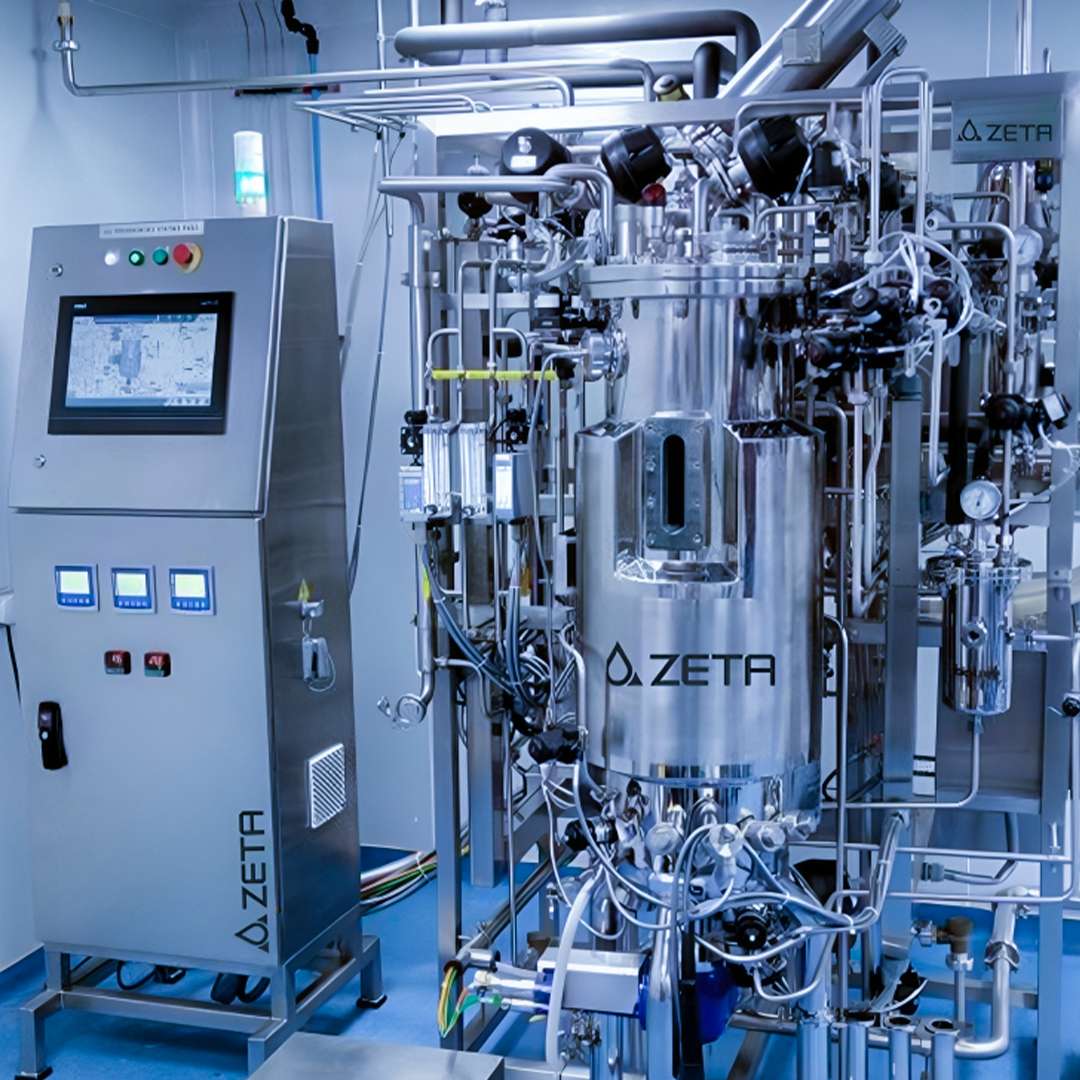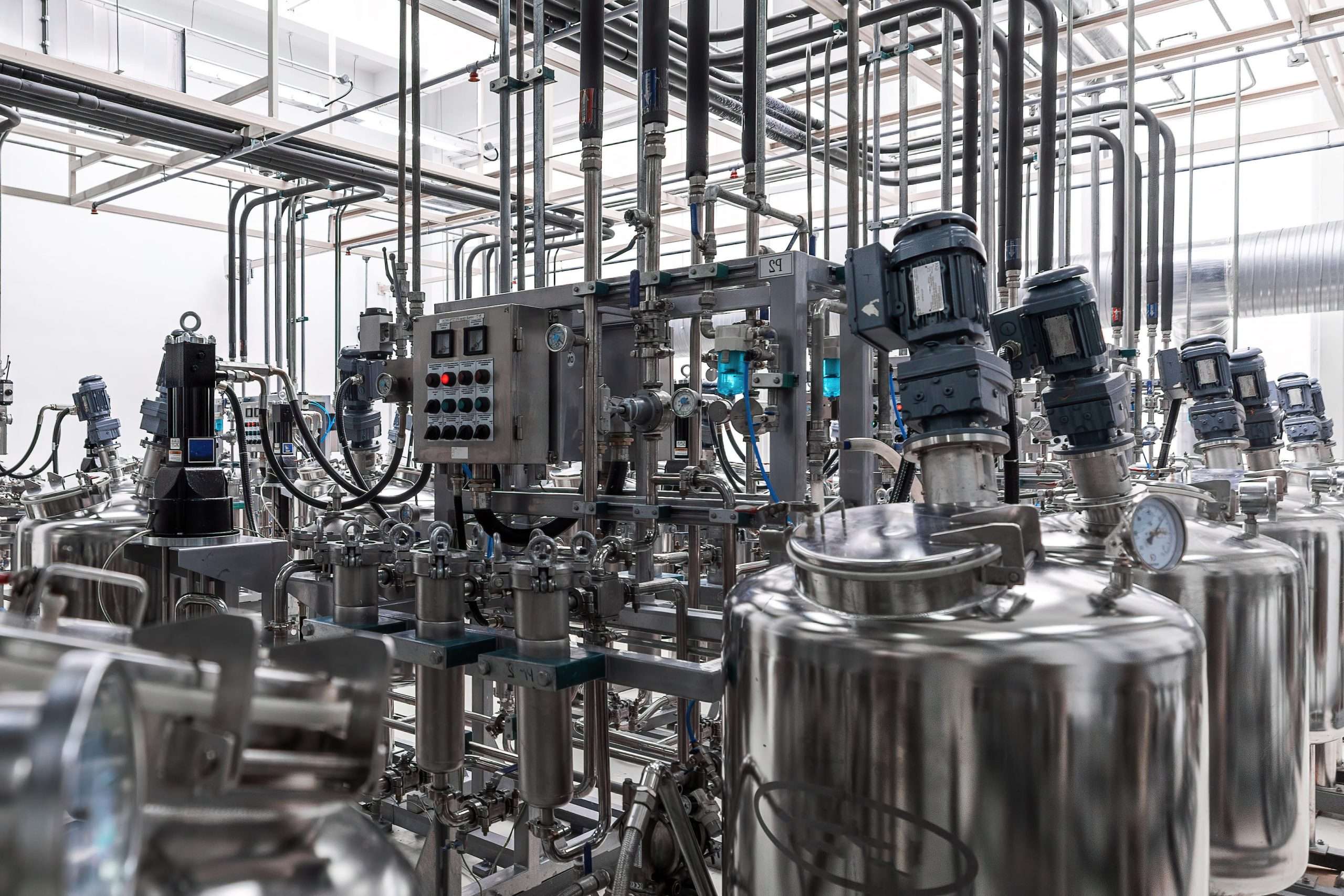
A bioreactor may look like a single vessel, but it is really a coordinated system of hardware, utilities, sensors, and automation designed to keep biological processes stable and repeatable. Whether the biology is microbial or cell-culture, the bioreactor’s parts work together to control temperature, pH, mixing, gas-management, and sterility—especially as conditions change during growth, feeding, and product formation. Knowing the key parts of a bioreactor helps you compare designs, understand performance limits, and specify equipment that fits your process window.
Below are the core bioreactor parts you will typically see in pilot and industrial set-ups, plus what each component does and why it matters. In any bioprocess, the goal is to keep the right parameters (like temperature and pH) stable so cell growth and product formation stay on track—whether the end goal is an enzyme, a therapeutic, or a broader biochemical process.
What is a bioreactor?
A bioreactor is a controlled vessel that supports a biological process by maintaining defined operating conditions for living cells or microorganisms. It is designed to manage mixing, mass-transfer (gas–liquid exchange), heat-removal, and sterile operation so the culture behaves predictably run-to-run. In many industries, the term bioreactor is used broadly, while “fermenter” is often used more specifically for microbial production.
Key features and benefits of a bioreactor include:
- Controlled environment for temperature, pH, and dissolved oxygen (or CO₂, as needed)
- Scalable mixing and mass-transfer matched to organism sensitivity and productivity targets
- Lower contamination risk through hygienic design, filtration, and effective CIP/SIP (where applicable)
- Improved repeatability via monitoring, automation, and time-stamped batch data
- Process flexibility across batch, fed-batch, and continuous strategies (process-dependent)
Type of bioreactor (common configurations)
The term “bioreactor” covers several designs, and the best choice depends on the culture medium, the substrate strategy, and how much aeration and agitation the process can tolerate. In practice, many projects start with a stirred tank set-up because it is familiar and versatile, then move to alternative formats when shear, mass-transfer, or solids-handling drive a different solution.
- Stirred-tank / tank bioreactor: the most common format for microbial and many upstream steps; in large production, a continuous stirred tank bioreactor may be used when steady-state output is the goal.
- Bubble column bioreactor: gas-driven circulation with fewer moving parts, often selected when gentler mixing is desired.
- Packed bed and other bed bioreactors: includes packed bed bioreactors used for immobilized systems where high cell density can improve productivity.
- Fluidized bed bioreactor: keeps particles in motion to improve contact and reduce channeling in certain processes.
- Membrane bioreactor: widely used in wastewater and wastewater treatment applications, where separation and biomass retention are central to performance.
Bioreactor Vessel and Headplate
The vessel is the main body of the bioreactor, typically stainless steel in industrial set-ups (commonly 316L for many applications) or single-use polymer assemblies in some cell-culture workflows. Vessel geometry influences mixing, gas dispersion, and heat-transfer, while material selection impacts cleanability, compatibility with process fluids, and long-term reliability.
The headplate (top plate) holds critical ports and mechanical connections such as the agitator drive (if used), gas-inlet lines, sensors, sampling assemblies, and addition lines. A well-planned headplate layout supports maintenance access, reduces dead-legs, and makes it easier to expand instrumentation as process requirements evolve.
Mixing System
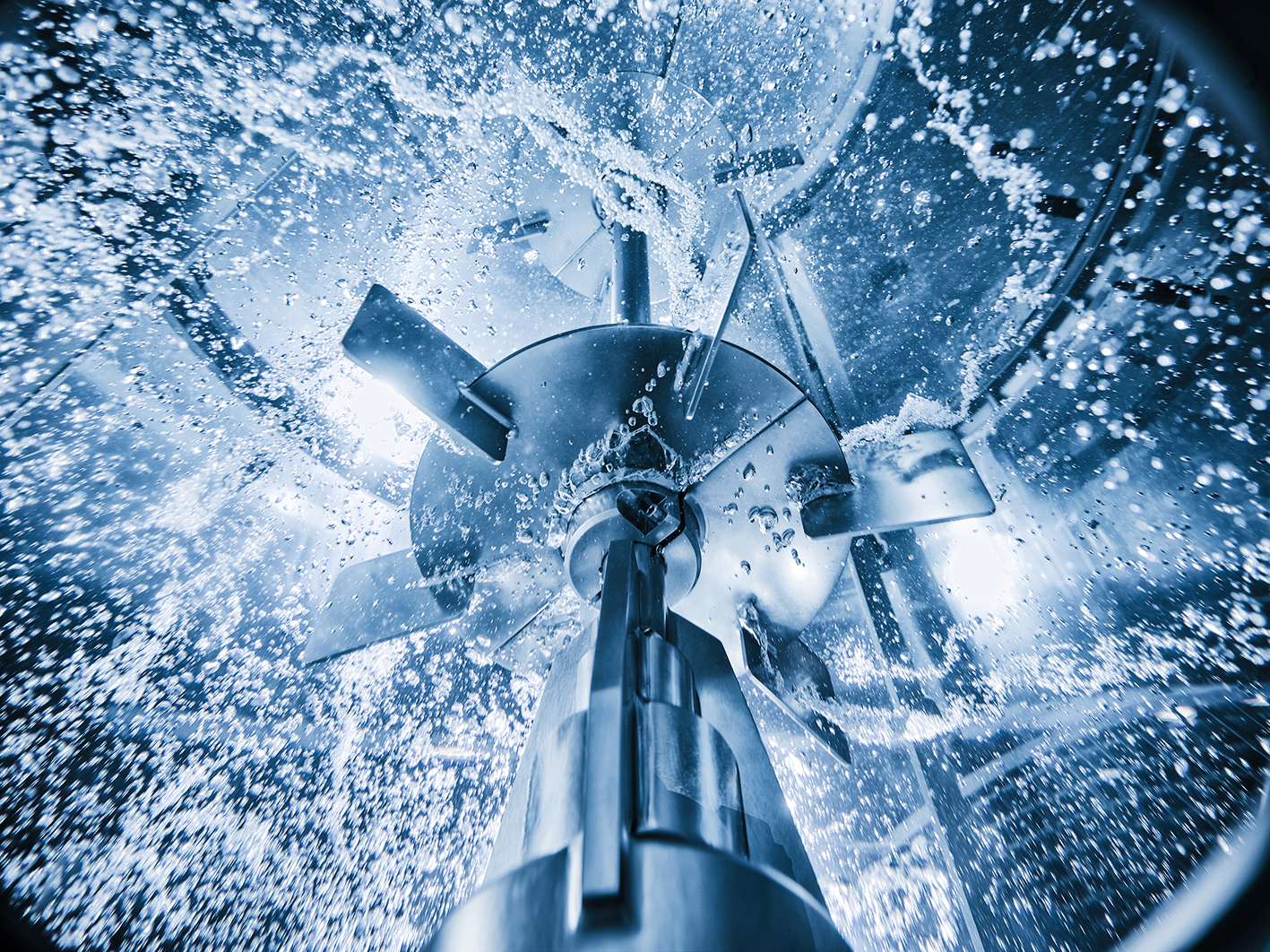
In stirred-tank bioreactors, the mixing system includes the motor, drive, shaft, and mixing elements that create circulation and maintain uniform conditions. This is where most of the bioreactor’s key moving parts live, and it is also where proper mixing is “made or broken” during scale-up. Mixing influences gradients (pH, temperature, concentration), gas dispersion, and overall process stability. In practical terms, agitation determines how quickly fresh nutrient feeds disperse and how uniformly oxygen is delivered, which is why mixing is often treated as a critical bioreactor must-have in production specifications. The right mixing design depends on broth properties and—especially in cell-culture—shear sensitivity.
Some bioreactors use non-mechanical mixing approaches (for example, airlift circulation, rocking-motion bioreactors, or wave-induced mixing in single-use systems). These designs prioritize gentle hydrodynamics while still supporting adequate mass-transfer.
Impellers or Mixing Elements
Impellers (or equivalent mixing elements) create flow patterns that determine how quickly nutrients, heat, and gases are distributed. In microbial applications, designs may be optimized for oxygen-transfer, while in cell-culture the goal is often stable mixing with minimal shear and bubble stress.
Impeller selection and positioning influence mixing time, tip-speed, and gas dispersion. Details like impeller blades and blade angle change shear and flow patterns, so selection is typically matched to organism sensitivity and the required mass transfer. Multi-impeller configurations may be used in taller vessels to improve circulation throughout the working volume.
Baffles (Where Used)
Baffles are vertical strips inside many stirred-tank vessels that reduce vortex formation and improve mixing efficiency. They help the impeller convert rotational motion into useful turbulence and circulation. In some low-shear or single-use designs, baffles may be reduced or replaced with alternative internal features.
Baffle design must remain hygienic and cleanable, with smooth welds and minimized hold-up zones. Poor baffle geometry can trap residues and complicate cleaning, increasing contamination risk.
Gas-Inlet System and Spargers
The gas-inlet system supplies sterile gases (commonly air and oxygen; sometimes nitrogen and CO₂) to control oxygen-transfer, CO₂ stripping, and culture conditions. In microbial applications, this often means introducing sterile air to a fermentation vessel (or providing sterile air to a fermentation step) while maintaining the right oxygen concentration as biomass increases. Spargers distribute gas into the liquid and strongly influence bubble size, gas holdup, and mass-transfer performance.
Gas trains typically include sterile filtration, flow control, and (where needed) gas-mixing assemblies. Setpoints are commonly expressed as a defined gas flow rate, and stable control becomes more important as oxygen demand rises during peak growth. For cell-culture, gas strategy often balances oxygen delivery with gentle sparging to reduce shear and protect cells.
Exhaust and Off-gas Handling
The off-gas system removes exhaust gases and maintains stable headspace conditions. It may include sterile filters, condensers, pressure-control valves, and (in some cases) off-gas analyzers to measure O₂ and CO₂.
Off-gas monitoring can provide insight into metabolism and help detect process drift early. Exhaust capacity also influences foam handling and pressure stability during high gas-flow operation.
Heat-Transfer System
Bioreactors use heat-transfer to maintain stable temperature, typically via a cooling jacket, internal coils, external heat-exchangers, or (in single-use) controlled temperature zones. Some set-ups also use a coil to provide heat during start-up or to hold temperature steady when ambient conditions vary. Temperature stability matters because growth-rate and product formation can shift with small deviations.
Heat-removal design is often based on worst-case metabolic heat-load, especially in high-density cultures. Under-sized heat-transfer can force operators to slow feeding or reduce intensity to stay within temperature limits.
Sensors and Instrumentation
Sensors provide real-time feedback for control loops. Common measurements include temperature, pH, and dissolved oxygen, with additional probes for foam, pressure, level/weight, conductivity, and (process-dependent) redox or biomass-related signals.
Sensor placement and calibration access affect data quality. Stable instrumentation reduces noise and drift, helping automation respond correctly and keeping batch data reliable for investigations.
Sampling and Addition Systems
Sampling systems allow representative sampling for at-line or off-line analysis (cell density, substrates, metabolites, product titre). Addition systems include inoculation lines, feed lines, base/acid dosing, antifoam dosing, and (sometimes) supplements.
Good design reduces contamination risk and supports repeatable technique. In long fed-batch runs, hygienic sampling and reliable dosing assemblies can make a significant difference in batch-to-batch consistency.
Foam-Control and Antifoam System
Foam can form due to proteins, surfactants, and high aeration rates. Foam sensing (via foam probes) helps trigger a controlled response before foam reaches filters or exhaust lines. Bioreactors often use foam probes and automated antifoam dosing, along with sufficient headspace and appropriately sized off-gas capacity.
Foam control is a balance: too little control risks overflow and contamination, while excessive antifoam can affect mass-transfer and downstream steps. A good foam strategy combines detection, dosing logic, and mechanical design features.
CIP/SIP and Hygienic Components (Where Applicable)
For stainless-steel bioreactors, clean-in-place and sterilization-in-place depend on spray devices, valves, drain points, and hygienic line routing. Effective CIP/SIP ensures cleaning solutions reach all internal surfaces with the right flow and contact time, and sterilization reaches required conditions throughout the vessel and connected piping. Hygienic routing, drainability, and valve selection are what make a system easy to clean in real operation—especially after viscous or high-solids runs.
Single-use bioreactors reduce cleaning needs, but still rely on sterility controls such as gamma-irradiated assemblies, sterile connectors, and validated handling procedures. In both cases, minimizing dead-legs and ensuring drainability are central to contamination prevention.
Control System and Automation
The control system (often PLC/SCADA or DCS-based) runs setpoints, recipes, alarms, and interlocks—this is the layer that makes the set-up feel modern automated in day-to-day operation. It is also where teams define what bioreactors include for compliance, operator guidance, and repeatability. It coordinates temperature control, pH dosing, dissolved oxygen control, gas-flow, mixing speed, and foam response, supporting repeatable operation across shifts.
Data capture—trends, event logs, and batch reports—supports troubleshooting and continuous improvement. Over time, consistent data makes it easier to optimize feeding strategies, set better alarms, and prevent recurring deviations.
Parts of a Bioreactor: Final Thoughts
A bioreactor is a complete system where vessel hardware, gas-management, mixing, heat-transfer, instrumentation, and automation work together to keep biology within a stable operating window. When the parts are selected and integrated correctly, they support sterility, repeatability, and predictable scale-up. Understanding each component helps you compare designs, identify performance limits, and specify a bioreactor that fits your organism, process mode, and production targets.