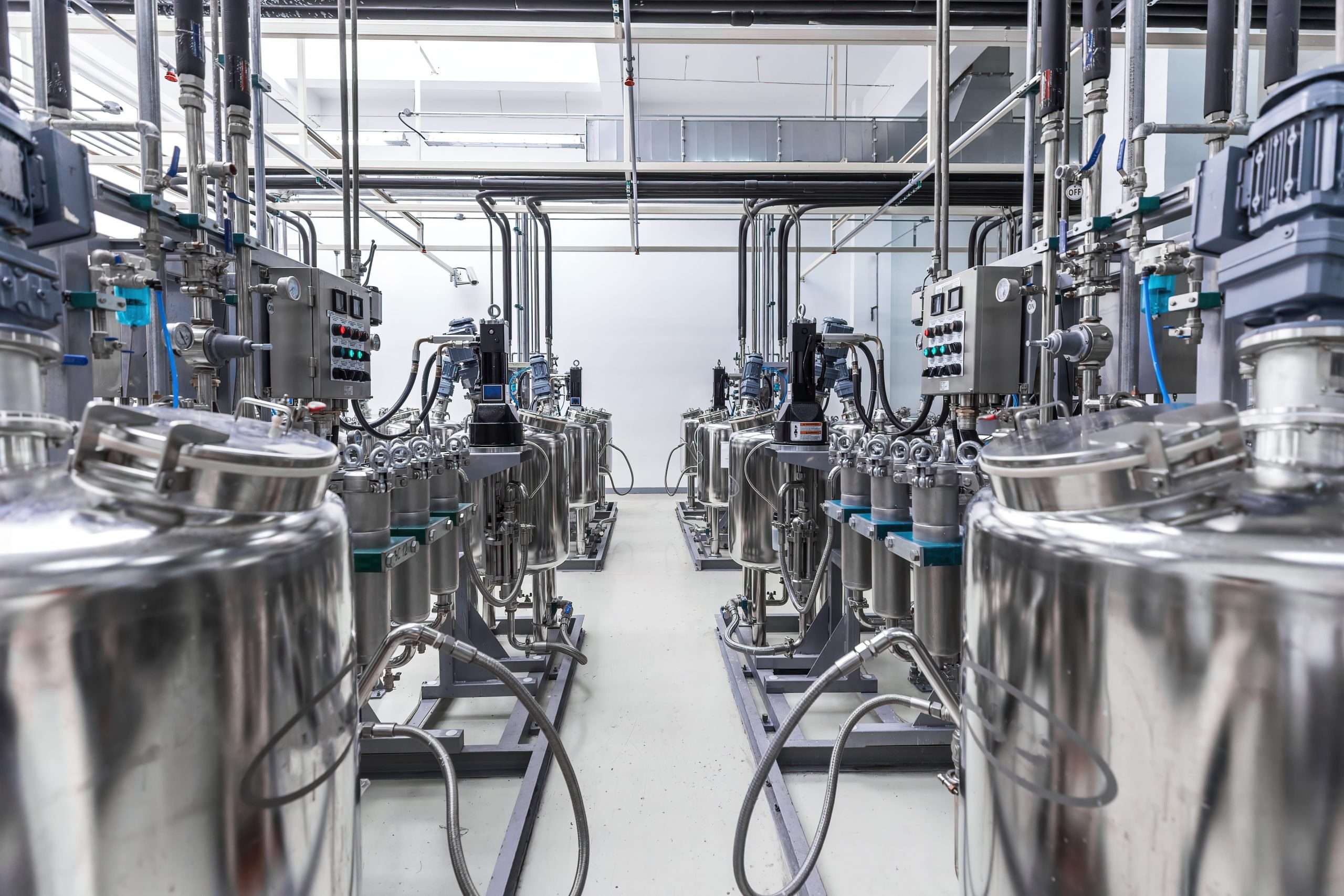
Bioprocessing is how modern industry turns biology into reliable, scalable production. Instead of relying on purely chemical synthesis, bioprocessing uses living cells (or living cells or their components)—such as a microorganism, enzymes, or mammalian cell culture—to convert a substrate into desired products. It underpins biotechnology and biopharmaceutical manufacturing, supporting everything from recombinant proteins and vaccine production to industrial enzymes, food processing ingredients, and biofuel production.
What makes bioprocessing powerful is not just the biology—it is the engineering that makes biology predictable. Bioprocess engineering brings microbiology, biochemistry, and process control together so key parameters like temperature, pH, oxygen-transfer, mixing, and feeding stay within the right operating window. When that control is reproducible, the bioprocess becomes easier to scale, optimize, and troubleshoot while maintaining consistent quality.
What bioprocessing means in practice
At its core, bioprocessing is the end-to-end workflow used to:
- Cultivate microorganisms or cell lines (or run enzyme reactions)
- Drive cell growth and product formation under defined conditions
- Perform product harvesting and downstream recovery
- Concentrate the product, remove impurities, and purify it to the required specification
- Complete formulation for use (for example, adding an excipient in pharmaceutical applications)
A bioprocess can be run in batch, fed-batch, continuous, or hybrid modes depending on the organism (microbial or cellular), the target product, and the performance targets. In industrial settings, bioprocessing also includes utilities, automation, documentation, and quality controls that support scalability and economic viability.
The main stages of bioprocessing
Bioprocessing is often described in two connected blocks—upstream processing and downstream processing (upstream and downstream). You will also hear these called upstream bioprocessing and downstream bioprocessing, especially in biopharmaceutical and pharmaceutical environments.
Upstream processing
Upstream processing (the upstream process, upstream part, or upstream stage) covers everything up to the point where the product is present in the process fluid. In microbial workflows, this often means cultivation and fermentation in a bioreactor, where yeast and bacteria convert nutrients into biomass (cell mass) and target metabolites. In biopharmaceutical workflows, the upstream process may focus on mammalian cell culture, where engineered cell lines produce biotherapeutics such as recombinant proteins; in some programs, upstream work also supports advanced modalities such as cell therapies (process-dependent).
Many modern bioprocessing uses recombinant strains or recombinant cell lines developed through genetic engineering to improve performance, increase robustness, or shift selectivity toward the target product. The culture medium (including cell culture media for cell-culture runs) is designed to supply the right nutrients and maintain stable conditions as the culture changes. A common operating choice is fed-batch, because controlled feeding can increase productivity and reduce unwanted by-products.
Typical upstream elements include:
- Strain or cell line selection and product development (often during process development)
- Seed train to scale the culture from small volumes to production-ready inoculum
- Media preparation and nutrient strategy (including cell culture media where relevant)
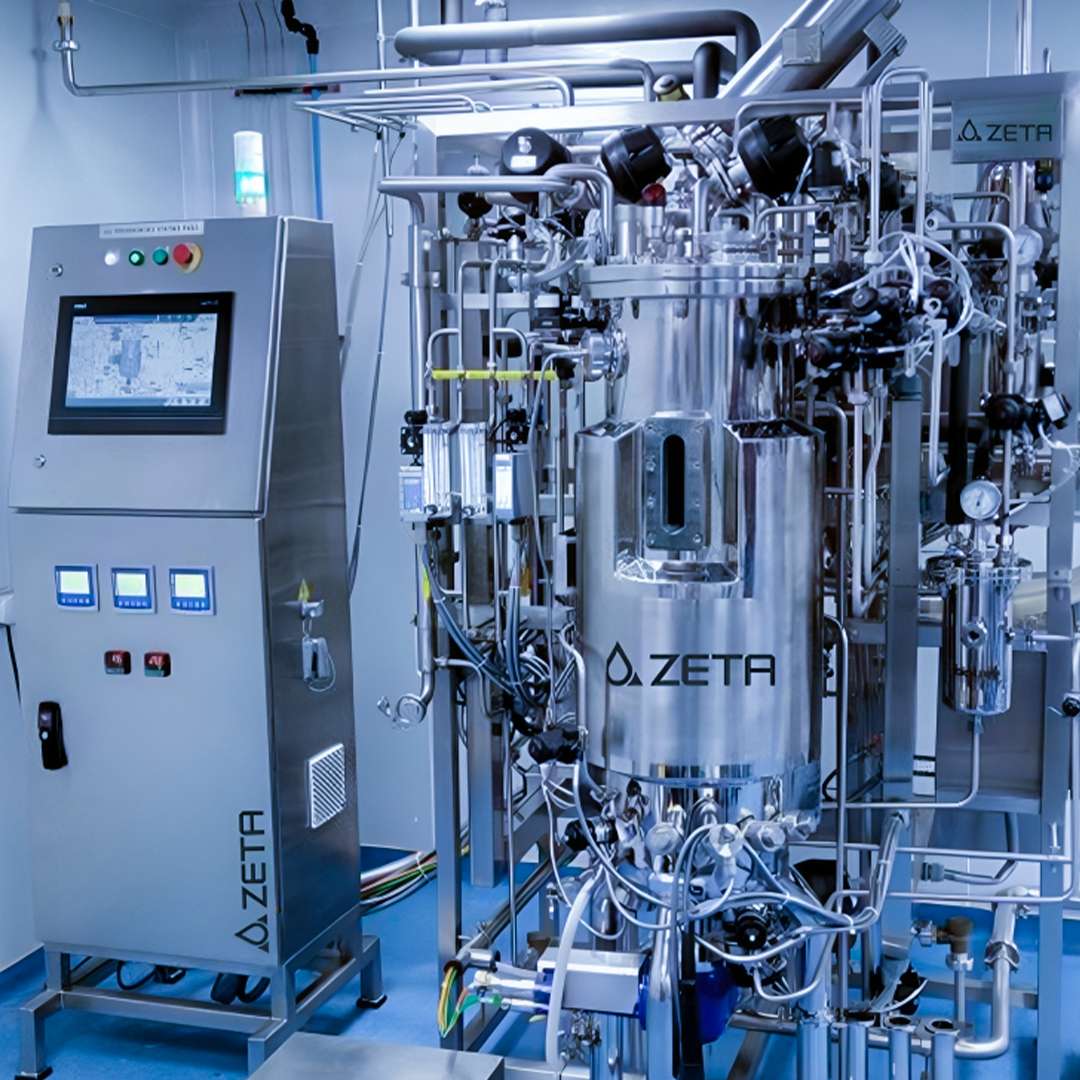
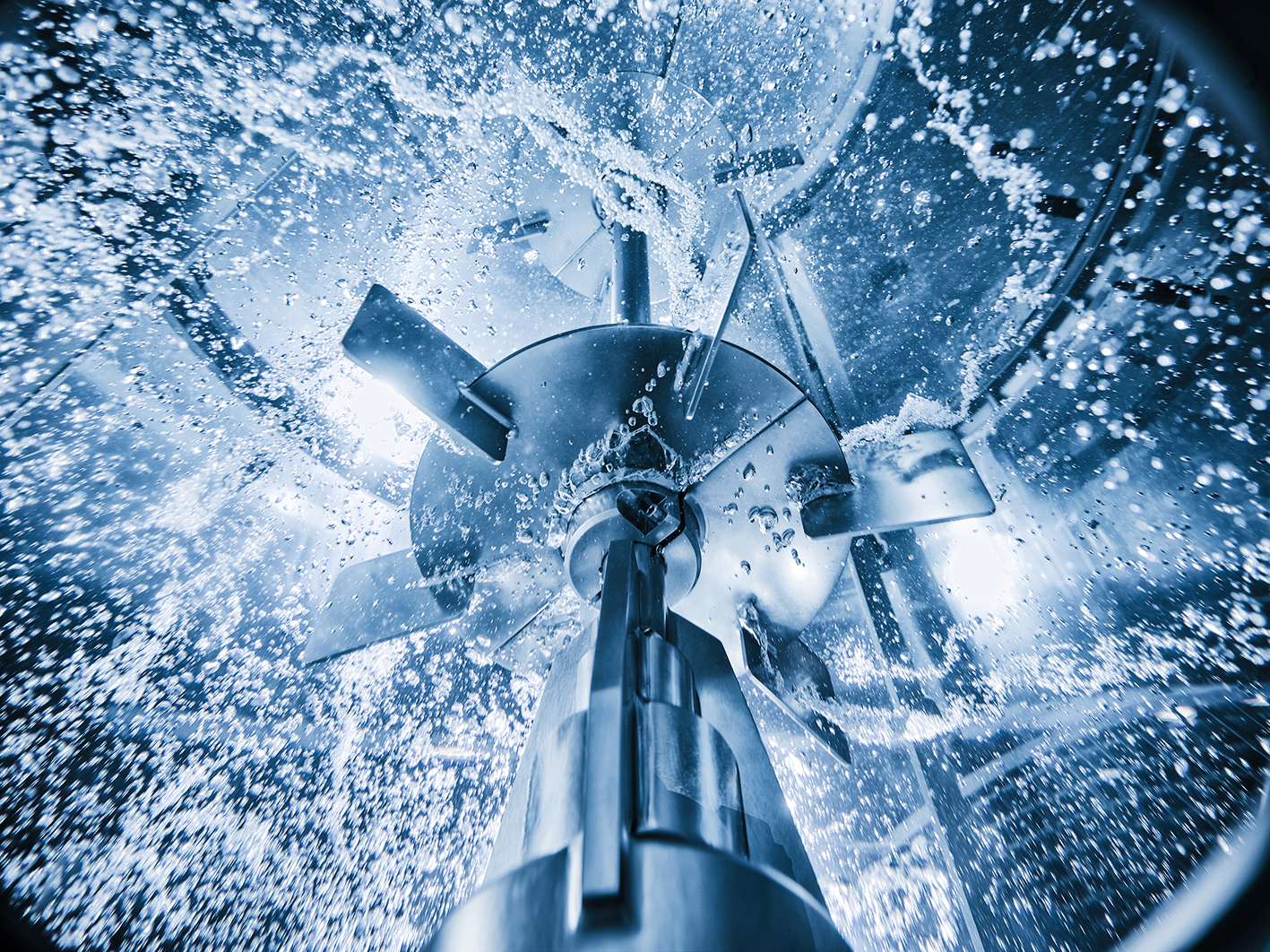
- Bioreactor operation: mixing, aeration, temperature control, pH control, and feeding (often fed-batch)
- Real-time monitoring and analytics (for example, dissolved oxygen, off-gas, and in some set-ups spectroscopy)
Upstream success depends on maintaining stable conditions as the culture changes over time—biomass increases, oxygen demand rises, heat-load increases, and foaming tendency may shift. In microbial systems, oxygen-transfer can be a limiting factor; in mammalian cell culture, low-shear mixing and dissolved gas control often take priority. Either way, upstream bioprocessing is where most yield is created (or lost), so control strategy and bioreactor design matter.
Downstream processing
Downstream processing (downstream bioprocessing) starts once the target product exists in the broth. Its job is to separate the product from cells, impurities, and by-products, then prepare it for end use—whether that is a pharmaceutical, a biopharmaceutical ingredient, or an industrial product. In practical terms, downstream processing is the purification of product workflow: it is where you purify, concentrate the product, and remove impurities to meet specifications.
Typical downstream elements include:
- Cell removal / harvesting and clarification (centrifugation, filtration)
- Cell disruption (if the product is intracellular)
- Primary capture to enrich the target product
- Purification techniques such as chromatography, precipitation, adsorption, and membrane steps
- Polishing steps to reduce trace impurities (application-dependent)
- Concentration and buffer exchange to concentrate the product and condition it for formulation
- Formulation and final filtration (including excipients in many pharmaceutical settings)
For high-value products—especially many biopharmaceutical products—downstream recovery can drive a large share of total cost and complexity. This is why upstream and downstream should be designed together: upstream choices (antifoam use, solids, and by-product profiles) directly influence filtration performance, chromatography loading, and final purity.
Supporting systems that make bioprocessing work
Across upstream and downstream, bioprocessing relies on supporting systems that protect consistency and reduce risk:
- Instrumentation and automation (stable control loops, alarms, recipe management)
- CIP/SIP and hygienic design for stainless-steel systems (where applicable)
- Single-use assemblies in some workflows to reduce cleaning burden and speed turn-around
- Analytics and quality testing, including real-time monitoring tools such as spectroscopy in advanced set-ups
- Data capture to support investigations, reproducible operation, and continuous improvement
Common types of bioprocessing
Bioprocessing is not one single method. The biology and the target product determine the approach, the operating mode, and the downstream path.
- Microbial bioprocessing: uses microbial organisms to produce enzymes, organic acids, metabolites, and industrial chemicals—often at high production scale.
- Cell-culture bioprocessing: uses mammalian cell culture and engineered cell lines for biotherapeutics, including recombinant proteins and some vaccine production steps.
- Biocatalysis: uses an enzyme or a biocatalyst (enzymes or whole-cell systems) to convert substrates with high selectivity.
- Renewable energy and biofuel production: includes bioethanol and broader biofuel production routes that convert sugars or biomass-derived feedstocks into renewable energy products (process-dependent).
Where bioprocessing is used
Bioprocessing supports multiple sectors, and each has different requirements around control, purity, and scale.
- Biopharmaceutical and biotech: vaccines, biotherapeutics, recombinant proteins, and microbial-derived products
- Pharmaceutical manufacturing: biological intermediates and specialized biologically derived ingredients
- Food and beverage / food processing: yeast propagation, cultures, fermented ingredients, and functional components
- Industrial biotechnology and chemicals: organic acids, amino acids, solvents, and bio-based building blocks
- Biofuel and renewable energy: bioethanol and other fermentation-based fuels
Benefits of bioprocessing
Compared with purely chemical routes, bioprocessing can offer meaningful advantages—especially when selectivity matters or the target compound is complex.
- High selectivity: biology can produce specific molecules with fewer unwanted by-products
- Scalability: once controlled conditions are established, production can scale from pilot to manufacturing
- Higher yields: better strains, feeding strategies, and control can increase productivity over time
- Reproducible quality: automation and data-driven control reduce run-to-run variability
- Renewable pathways: some routes use renewable feedstocks and support lower-carbon options (application-dependent)
Key challenges in bioprocessing
Bioprocessing is powerful, but it is not “set and forget.” The main challenges tend to sit at the interface between biology and engineering.
- Process variability: small shifts in conditions can change cellular behavior and metabolite profiles
- Oxygen-transfer and heat-removal limits: common bottlenecks in aerobic, high-density runs
- Contamination risk: long run-times and complex workflows increase exposure points if design is weak
- Scale-up risk: mixing and mass-transfer change with vessel size, so comparability must be planned
- Downstream complexity: purification, filtration capacity, and chromatography loading can dominate cost for high-purity products
How to choose the right bioprocessing approach
If you are evaluating a new route or scaling-up production, these checkpoints help align biology, equipment, and operational reality.
Define the product requirements
Start with what “good” looks like: target titre, productivity, cycle-time, quality attributes, and purity needs. These targets determine how much downstream processing is required and which purification techniques are feasible.
Match the organism or catalyst to the process mode
Decide whether batch, fed-batch, or continuous operation best fits the organism, cell culture system, or enzyme route. The right mode supports stable production of energy and growth without pushing the culture into unwanted by-products.
Design for the limiting factor
For many aerobic processes, oxygen-transfer is the bottleneck; for others it may be heat-removal, viscosity, foaming, or downstream recovery. Designing around the true limiting factor early is one of the fastest ways to avoid rework later.
Build a control and data strategy
Instrumentation depth, automation level, and data capture should match the risk profile. Strong monitoring makes it easier to enhance the process over time and defend decisions when performance drifts.
Align upstream with downstream
The best upstream productivity is not helpful if downstream cannot recover product efficiently. Confirm early how upstream conditions (solids, impurity profiles, concentration, and additives) affect harvesting, purification, and final formulation.
Conclusion
Bioprocessing is the end-to-end practice of using living cells (or their components) to convert substrates into valuable products under controlled conditions. It combines upstream bioprocessing—cultivation, fermentation, and bioreactor operation—with downstream bioprocessing steps that harvest product, remove impurities, concentrate the product, and purify it through methods such as filtration, centrifugation, chromatography, and precipitation. Supported by automation, real-time monitoring, and robust data capture, a well-designed workflow is scalable and reproducible across pilot and manufacturing. When the process is optimized around real constraints—oxygen-transfer, heat-removal, contamination risk, and downstream recovery—bioprocessing becomes a commercially viable route for biopharmaceutical, biotechnology, food, and renewable energy applications.