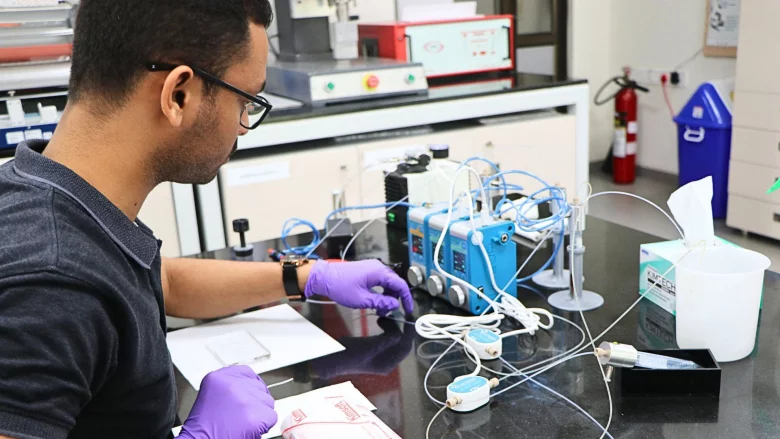

If you want bioprocessing outcomes you can trust—consistent yields, predictable quality, and smoother scale-up—bioprocess engineering is the discipline that makes it happen. It turns biology (which can be variable) into a reliable, controllable manufacturing process by combining microbiology, chemistry, and practical engineering. In short: it is how teams design, run, and improve bioprocesses so they perform the same way run-to-run, even as volumes, equipment, and operating teams change.
This guide covers the basic concepts that underpin most industrial and pilot-scale bioprocesses, from cell growth and kinetics to mass-transfer, heat-removal, and scale-up.
What bioprocess engineering is
Bioprocess engineering is a discipline that applies chemical engineering methods to biological production. It focuses on designing and operating a bioprocess—using microbial cultures, cell culture (including animal cell cultures and, in some applications, plant cell cultures), or an enzyme system—to make desired products at scale. You will also see it described as biochemical and bioprocess engineering, because it sits at the intersection of biochemical reaction behaviour and practical processing constraints. It bridges two realities:
- Biology: living systems respond to their environment (nutrients, oxygen, pH, temperature) in non-linear, sometimes fragile ways.
- Engineering: real equipment has limits (mixing, oxygen-transfer, heat-removal, sterility, utilities) that shape what the biology can do.
A good bioprocess engineer aligns those realities with a solution-oriented mindset: identify what limits performance, build a control strategy around it, and specify equipment that is fit-for-purpose. This is why the role often looks like a translator—turning biology into engineering principles and technology choices that a plant can run reliably.
The bioprocess “system view”
Bioprocesses work best when treated as end-to-end systems rather than isolated unit operations. Even at a basic level, you can think in three connected layers:
- Upstream (cultivation and product formation): seed train, media prep, bioreactor operation.
- Downstream (recovery and purification): harvest, clarification, capture, polishing, formulation.
- Supporting systems: utilities, automation, sterility strategy, data capture, and quality controls.
A change in one layer usually affects the others. For example, a higher aeration rate might improve productivity upstream but increase foam, antifoam use, and downstream filtration challenges.
Core biology concepts you need to know
Biology sets the “rules” of the process. At a practical level, a cell’s behaviour is shaped by major metabolic pathways, which determine how substrates are converted into biomass, product, and by-products under given conditions. Modern biotechnology adds another layer of complexity: genetically engineered and heterologous production strains (often designed for protein expression) can improve output, but they may also introduce new sensitivities that the engineer must account for.
Cell growth and phases
Most cultures follow recognisable phases:
- Lag phase: cells adapt to the environment; growth is slow.
- Exponential phase: rapid growth; high nutrient and oxygen demand.
- Stationary phase: growth slows (nutrient limitation, inhibition, or stress); product formation may increase for some pathways.
- Death phase: viability declines; product quality or yield may deteriorate.
Why it matters: oxygen-transfer, heat-load, and foaming risk often peak during exponential growth, which is where the fermenter/bioreactor must have operating headroom.
Growth kinetics (the “speed” of biology)
A simplified way to describe growth is the specific growth rate (μ). In many cases, μ depends on:
- Substrate availability (carbon source, nitrogen source, trace nutrients)
- Oxygen availability (for aerobic systems)
- Inhibition (product inhibition, toxic by-products, high osmolarity, etc.)
A common model is Monod kinetics, which relates growth rate to substrate concentration. In enzyme-based processing, the parallel concept is enzyme kinetics: a simple way to think about how reaction rate changes with substrate level, inhibition, and temperature. You do not need the maths to start—just the principle: beyond a certain point, “more substrate” does not always mean “more growth”, and over-feeding can shift metabolic pathways into unwanted by-products.
Metabolic pathways, genetics, and strain selection
A bioprocess is only as stable as the biology you are running. That is why strain selection matters: microbial genetics, mixed cultures, and adaptation can all change the way growth and product formation behaves over time. In industrial development work, teams may use genomics and other cellular information (rooted in DNA-level changes) to understand why performance drifts, or why a genetically engineered strain behaves differently after scale-up.
The takeaway for an engineer is simple: biology is not a black box. Even an introductory awareness of molecular drivers helps you set realistic operating windows, choose monitoring points, and build a process that stays reproducible in the real world.
Stoichiometry and yield
Every bioprocess follows a mass-balance reality: substrates are converted into biomass, product, and by-products.
Key yield ideas include:
- Yx/s: biomass produced per substrate consumed
- Yp/s: product produced per substrate consumed
- Maintenance demand: substrate spent just to keep cells alive (not to grow or make product)
Why it matters: yield connects biology to cost. If substrate is being burned for maintenance or by-products, productivity and economics suffer.
Core engineering concepts you need to know
Mass balance and rate balance
A practical bioprocess engineering habit is to ask, for any component:
- What goes in?
- What comes out?
- What accumulates in the vessel?
- What is being produced or consumed by the cells?
This applies to substrate, biomass, product, oxygen, and carbon dioxide. Even a basic mass balance can quickly show what is limiting (for example, oxygen supply) and what is drifting (for example, substrate accumulation).
Mixing and hydrodynamics
Mixing is how you keep conditions uniform. Poor mixing creates gradients:
- pH pockets near dosing points
- substrate spikes near feed inlets
- temperature hot-spots near heat-transfer surfaces
- dissolved oxygen differences across the vessel
In stirred-tank systems, mixing depends on impeller type, speed, baffles, and vessel geometry. In gas-driven systems (bubble-column, airlift), it depends on gas rate and reactor configuration.
A practical rule: the more complex (viscous, foamy, high-solids) the broth, the more carefully mixing must be designed and verified.
Gas–liquid mass-transfer (oxygen-transfer)
For aerobic processes, oxygen is often the limiting input—not because air is unavailable, but because transferring oxygen into the liquid fast enough is hard.
Key concepts:
- kLa: a measure of oxygen-transfer capability (combines mass-transfer coefficient and interfacial area)
- DO (dissolved oxygen): what cells can access in the liquid
- Driving force: the difference between saturation oxygen and current DO
What affects oxygen-transfer:
- sparger design and bubble size
- gas flow and oxygen-enrichment
- agitation intensity (bubble breakup and dispersion)
- pressure (increases oxygen solubility)
- broth properties (viscosity, surfactants, antifoam)
In practice, oxygen-transfer is not a single knob—you tune gas, agitation, and pressure together, while managing foam and shear limits.
Heat-transfer and temperature control
Cells generate heat, especially at high density. Temperature directly affects growth rate, product formation, and by-product pathways.
Common heat-transfer approaches:
- vessel jacket
- internal coils
- external heat-exchanger loops
Bioprocess engineers size heat-removal around worst-case heat-load (often near peak growth), because temperature control margins shrink at larger volumes.
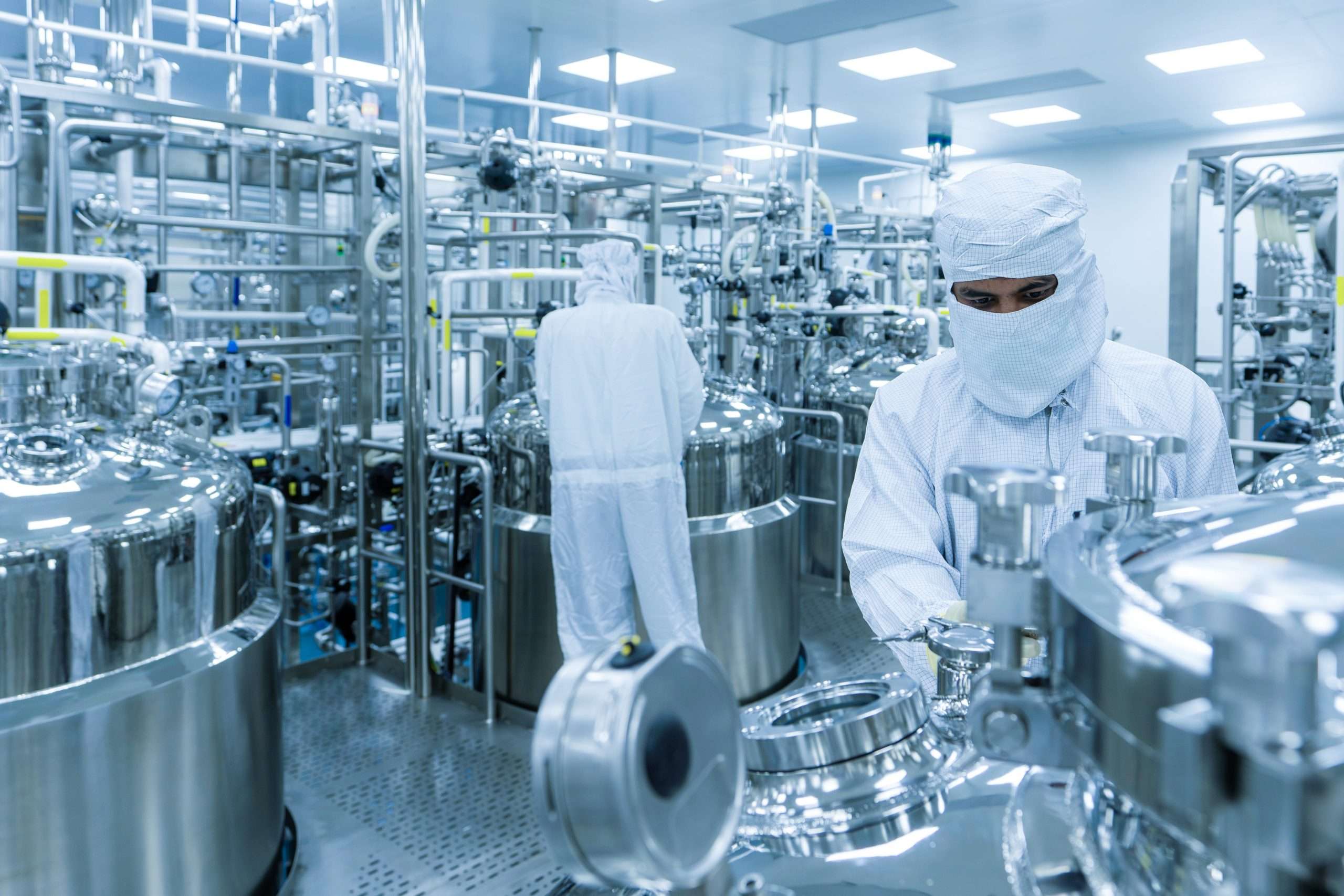
Sterility and contamination control
Many bioprocesses are vulnerable to contamination because the culture medium is nutrient-rich. Contamination can reduce yield, shift metabolism, or cause batch failure.
Key sterility concepts:
- CIP/SIP in stainless-steel systems (clean-in-place / sterilisation-in-place)
- sterile filtration of gases and additions
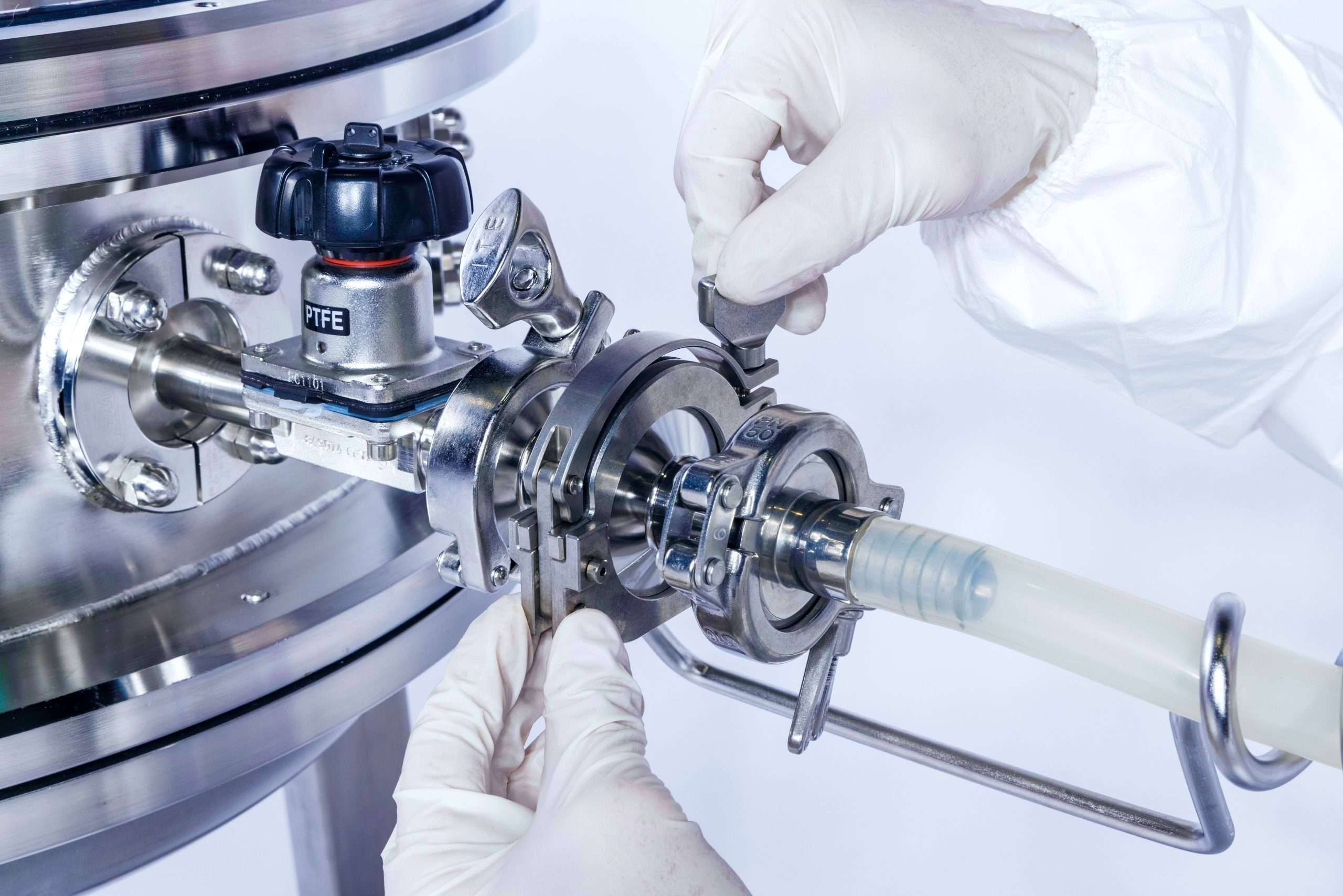
- hygienic design: drainability, minimised dead-legs, cleanable geometries
- aseptic sampling and connections
Even “small” design details (valve selection, line routing, access points) can drive long-term reliability.
Process modes: batch, fed-batch, continuous
Bioprocess engineering choices are heavily shaped by the operating mode:
- Batch: simplest operation; good for flexibility; downtime between runs.
- Fed-batch: controlled feeding to manage growth and by-products; widely used for high titres.
- Continuous: steady-state operation; potentially high productivity; higher demands on sterility and control stability.
A tailor-made approach starts by matching the mode to the organism, the product pathway, and the quality targets.
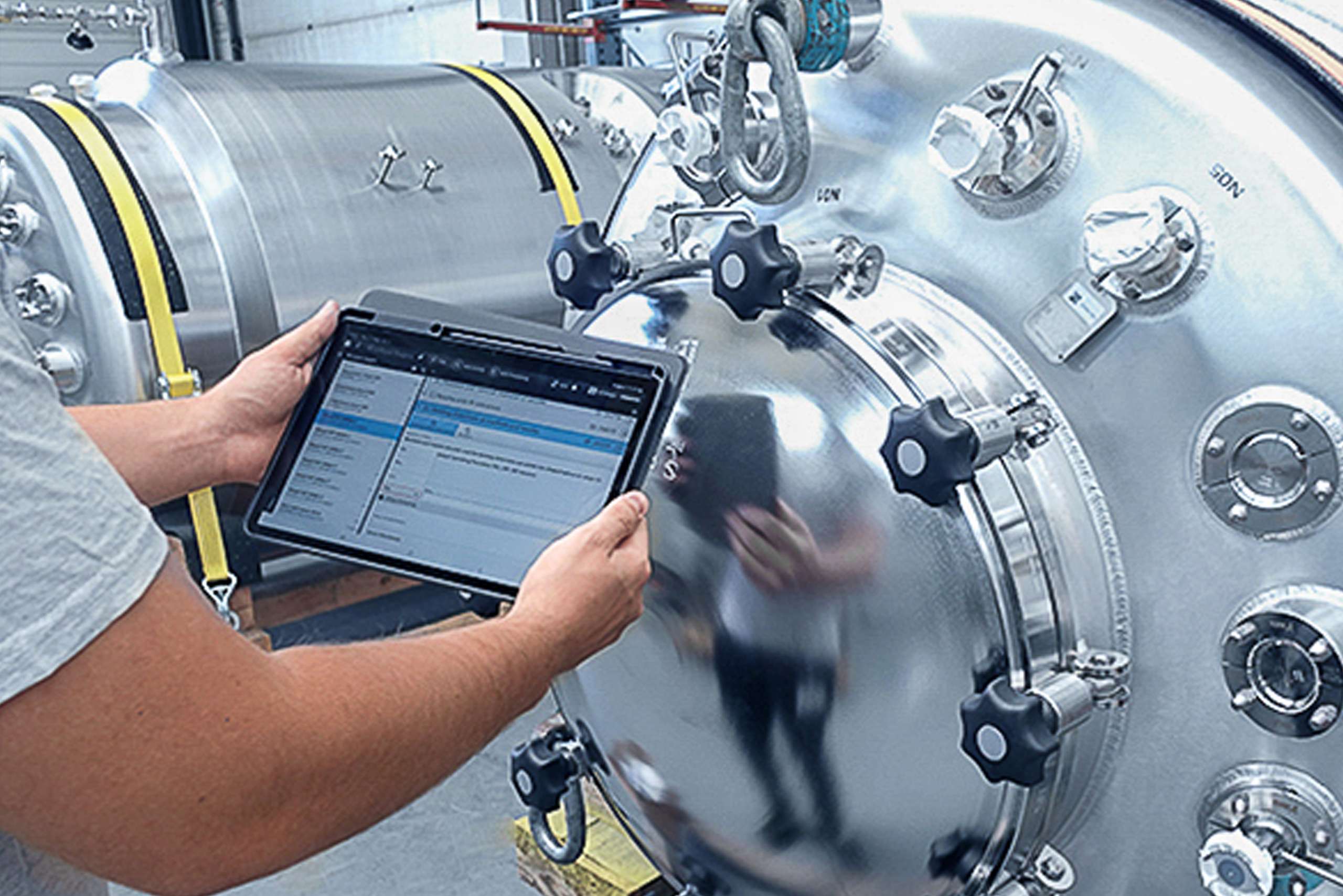
Measurement, control, and automation
Bioprocesses are only as good as what you can measure and control. The most common controlled variables include:
- temperature
- pH
- dissolved oxygen
- agitation speed
- gas flow
- pressure
- foam detection
Control loops typically include:
- pH control (acid/base dosing)
- DO control (cascade across agitation, gas flow, oxygen-enrichment)
- temperature control (utility flow control)
Automation and data capture matter because they reduce manual interventions (lowering contamination risk) and provide evidence for troubleshooting when batches behave differently.
Scale-up: why performance changes with volume
Scale-up is not “just making it bigger.” When volume increases:
- mixing times increase
- oxygen-transfer can become limiting
- heat-removal becomes harder
- gradients become more likely
Common scale-up strategies include holding certain similarity criteria (for example, power per volume, tip speed, kLa, or mixing time), but there is no universal best choice. A highly complex process may require a hybrid strategy: preserve product quality drivers first, then optimise throughput.
Linking upstream decisions to downstream recovery
Bioprocess engineering is most effective when upstream is designed with downstream in mind. Downstream purification is not just a final step—it is a function of what upstream delivers in terms of solids, impurities, and product location. Upstream choices that affect downstream include:
- antifoam use (can foul filters and reduce mass-transfer)
- solids and viscosity (affect centrifugation and filtration)
- product location (intracellular vs secreted)
- impurity profiles (host cell proteins, metabolites, salts), which can increase purification load and extend processing time
A reliable process is one where upstream productivity and downstream recovery are balanced, so the overall output (not just reactor titre) improves.
Where these basic concepts show up in real applications
These fundamentals repeat across applications—what changes is which constraint becomes dominant.
- Industrial: large-scale production of commodities (for example, enzymes and microbial products) where cost, yield, and scale-up decide commercial success.
- Medical applications: biopharmaceutical and biotechnology manufacturing (for example, recombinant proteins) where consistency, contamination control, and purification requirements are strict.
- Environmental: bioremediation and nutrient removal processes where mixed cultures and variable inputs shift the operating window and control priorities.
Practical checklist: basic questions bioprocess engineers ask
- What is the target product, and what defines “good” quality?
- What is the limiting factor today: oxygen-transfer, heat-removal, mixing, inhibition, or downstream recovery?
- Which parameters are critical to control, and which are “nice to have”?
- Where are the main contamination risks (connections, sampling, additions, exhaust)?
- What data do we need for investigations and continuous improvement?
- How will the process behave at the next scale, and what will change first?
Conclusion
Bioprocess engineering is the practical discipline that makes biological production reliable, scalable, and commercially viable. Its basic concepts—growth kinetics, yields, mass balances, mixing, oxygen-transfer, heat-removal, sterility, and control—explain why bioprocesses succeed or fail at scale. When those fundamentals are applied with a system view, teams can build processes that are easier to run, easier to troubleshoot, and more consistent run-to-run. The result is a controlled environment where biology delivers predictable outcomes, not surprises.