Sustainability is no longer a side conversation in the pharmaceutical industry — it is becoming a core design principle. As global demand for medicines rises and manufacturing scales up, the environmental footprint of pharma production is under increasing scrutiny. From energy-intensive cleanrooms to the growing use of single-use plastics, the sector faces a critical challenge – how to maintain the highest sterility and compliance standards while reducing waste and resource consumption.
The future of pharma innovation will not be defined by performance alone, but by how responsibly that performance is delivered. This is where engineering plays a transformative role — and where ZETA’s culture of innovation and sustainability comes to life.
Innovation with Responsibility: The ZETA Approach
At ZETA India, innovation is never pursued in isolation from environmental responsibility. Every new solution is developed with a dual lens: How can we improve process safety and efficiency? And how can we reduce environmental impact at the same time?
This mindset is deeply embedded in ZETA’s global engineering culture. Rather than defaulting to conventional industry practices, ZETA teams challenge established approaches and seek smarter, more sustainable alternatives – especially in areas where the industry has historically relied on disposable systems for the sake of sterility and convenience.

Rethinking Aseptic Connections: A Case of Purpose-Driven Innovation
Aseptic connections are critical in pharmaceutical and biotech manufacturing. They allow sterile fluid transfer between containers, systems, and analytical equipment — and must meet strict compliance requirements to prevent contamination. Traditionally, many of these connections rely on single-use components, which generate significant plastic waste and require continuous replacement.
ZETA approached this challenge differently.
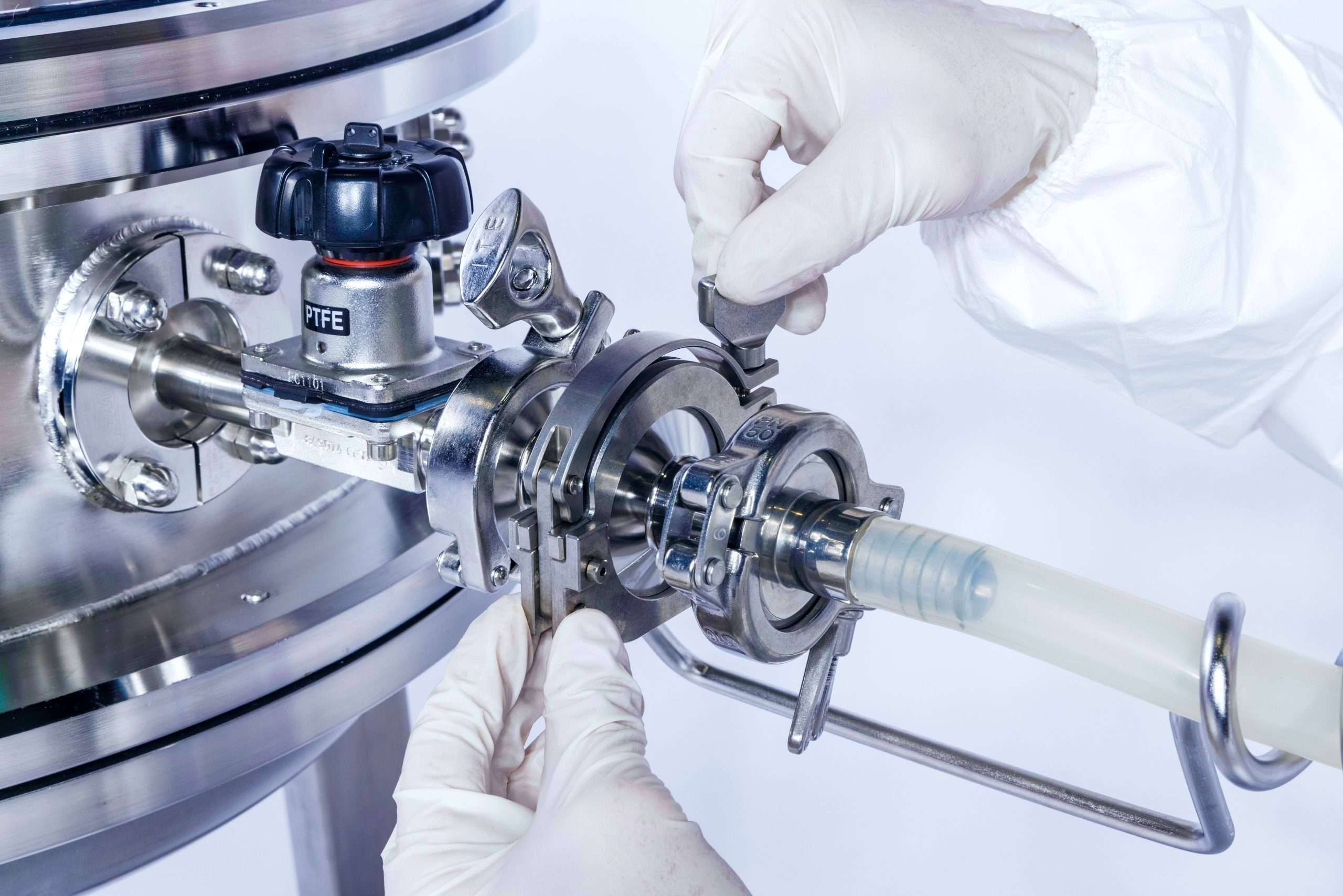
Instead of accepting disposability as the norm, ZETA engineers developed EcoConnect — a sterile connection system designed not only for GMP compliance and process reliability, but also for long-term environmental compatibility.

Where Sustainability Meets Engineering Excellence
The defining feature of EcoConnect is its largely reusable stainless-steel design, which dramatically reduces waste compared to conventional single-use connector systems. The only components discarded after use are small sealing films, minimising material disposal and packaging waste. This significantly lowers the environmental burden associated with sterile fluid transfer.
At the same time, the system maintains the highest sterility standards through an innovative, patented mechanism that removes sealing films in a controlled manner, preventing particles from entering the fluid path during connection. This shows how sustainability at ZETA never comes at the cost of process safety or compliance.
Because the system is built from robust, sterilisable materials, it can withstand cleaning, autoclaving, and steam sterilisation. This extends product life cycles and reduces the need for continuous manufacturing of disposable components — a clear step toward more resource-efficient pharmaceutical production.

A Culture That Turns Regulation into Opportunity
EcoConnect also reflects another defining aspect of ZETA’s culture – turning regulatory change into innovation opportunities.
The tightening of EU GMP Annex 1 requirements for aseptic processing created a need for more reliable, pre-assembled engineering solutions. Instead of viewing this as a compliance hurdle, ZETA saw an opportunity to rethink how sterile connections could be made safer and more sustainable at the same time. The result was a solution that not only meets regulatory expectations but also raises the environmental benchmark for the industry.

Engineering the Future, Responsibly
For ZETA India, sustainability is not a feature added at the end of a project — it is a value embedded at the design stage. Whether developing full biopharma facilities or individual process solutions, the goal remains the same: reduce environmental impact while increasing process robustness and long-term value for customers.
EcoConnect is just one example of how ZETA’s engineering culture translates global sustainability ambitions into practical, GMP-compliant solutions for the pharmaceutical and biotech industries.
Because the future of pharma manufacturing will not only be sterile and efficient — it must also be sustainable. And at ZETA, that future is being engineered today.