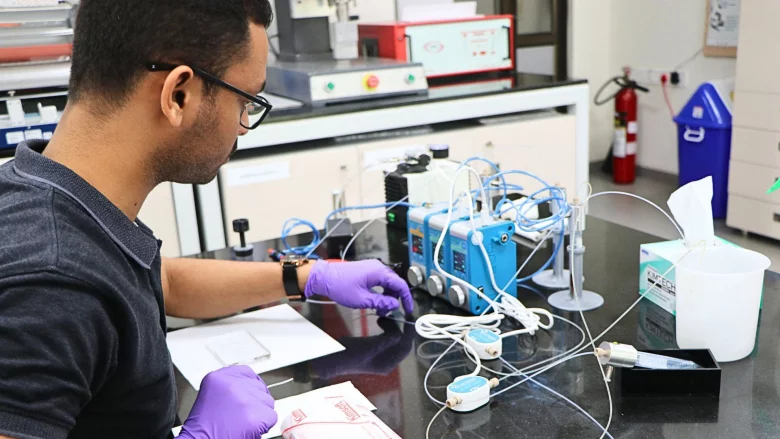

If you need sustained output without the downtime and variability that come with repeated batch processes, a perfusion bioreactor can be the most reliable route. In perfusion culture (also called perfusion cell culture), the bioreactor is run in continuous perfusion: you continuously feed fresh media (cell culture media) while spent media is continuously removed from the culture. The result is a steadier culture environment, which supports high cell densities, consistent product quality, and smoother scale-up for highly complex cell culture processes—especially in biopharmaceutical manufacturing.
This article explains what a perfusion bioreactor is, how the perfusion process works, the main retention methods and perfusion systems, where it is used, and how to choose the right approach.
What is a perfusion bioreactor?
A perfusion bioreactor is a bioreactor system operated in continuous or semi-continuous mode where fresh culture medium is added while an equal volume of medium from the bioreactor is removed—so the working volume stays roughly constant. Crucially, most perfusion culture systems include cell retention, meaning cells within the bioreactor remain in the reactor while the medium is exchanged.
In practical terms, perfusion keeps the culture “fed and clean” so cells in the reactor can keep producing over longer run times compared with batch culture or a standard fed-batch (fed batch) approach. Because the process runs longer, the retention strategy, oxygen transfer, and contamination control typically matter even more than they do in shorter runs.
How the perfusion culture process works within the bioreactor
Perfusion has three simultaneous goals:
- Continuously feeding fresh medium Fresh media supplies nutrients and carbon sources (including carbon sources with fresh medium), amino acids, salts, and growth factors to support ongoingcell growth and, in many cases, cell growth and protein production.
- Removing displaced medium and waste As culture and the displaced medium leave the system, waste products are carried out (for example, lactate and ammonia, process-dependent). In most designs, displaced medium is replenished with an equal volume of fresh medium to keep the culture process steady.
- Retaining cells (the defining step) A cell retention device allows medium exchange while retaining the cells in the reactor. This is how perfusion cultivation achieves higher cell densities without simply increasing bioreactor size.
Because perfusion runs for longer, the bioreactor during perfusion must maintain stable control (temperature, pH, dissolved gases) and reliable oxygen transfer, while also protecting asepsis over extended periods.
Key terms in perfusion bioprocessing
Perfusion discussions often use a few standard metrics:
- Perfusion rate / flow rate: how much medium is exchanged per unit time (e.g., L/day).
- Volumetric perfusion rate: perfusion rate expressed as vessel volumes per day (VVD), useful for comparing different bioreactor volume configurations.
- Dilution rate: perfusion rate divided by working volume.
- Viable cell density (VCD): the viable cell concentration; the core measure for maintaining high cell density.
- Cell-specific perfusion rate (CSPR): medium flow per viable cell number (useful when cell density ramps).
- Bleed: controlled removal of cells to manage maximum cell density, maintain a more homogeneous cell distribution, and protect cell viability.
These terms help teams balance productivity, media cost, and long-run stability during a perfusion run.
Cell retention: the defining feature of perfusion systems
A perfusion bioreactor is only as effective as its retention strategy. In practice, this means selecting retention methods in perfusion that can hold cells in the reactor reliably, with stable cell retention efficiency and minimal fouling.
Common cell retention methods include:
Alternating tangential flow (ATF)
Alternating tangential flow filtration uses a diaphragm pump to create an alternating flow across a filter module. The alternating motion helps reduce fouling while retaining cells, which is why it is widely used in mammalian cell culture and other suspension culture perfusion cell culture processes.
Tangential flow filtration (TFF)
TFF uses continuous cross-flow filtration to retain cells while allowing clarified medium to pass. It can be highly effective, but it requires careful design to manage shear, filter loading, and long-duration stability.
Spin filters and internal retention devices
Placed inside the bioreactor, these devices can simplify the perfusion bioreactor system layout. They can, however, be more sensitive to clogging and may require tighter control of debris generation and operating conditions.
Settlers (gravity-based retention)
Settlers rely on settling behaviour to retain cells. They are more process-limited, but can work well where cell behaviour is predictable and stable.
Hollow-fiber or membrane-based retention formats
Some perfusion systems use membrane separation to retain cells. These can be attractive for low-shear needs, but they may scale by running modules in parallel and require careful attention to oxygen transfer and gradient formation.
Typical perfusion bioreactor types
Perfusion is an operating mode that can be applied to different culture systems, but it is most commonly implemented in:
- Stirred-tank perfusion bioreactors: a stirred vessel paired with an external retention device (ATF/TFF). This is the most common industrial configuration.
- Single-use perfusion bioreactors: disposable bag reactors with perfusion-compatible connectors and retention hardware, valued for fast changeover and reduced cleaning burden (single-use / single use bioreactors).
- Fixed-bed / packed-bed perfusion systems: cells are immobilised and perfused with medium; used in some adherent or structured culture processes.
The right choice depends on the cell line (and cell type), whether the culture is suspension culture or adherent, shear sensitivity, run duration, and how the product is harvested.
Seed and cell seeding: setting up a stable perfusion run
Perfusion performance is strongly influenced by what happens before the system reaches steady operation.
- Seed quality determines how consistently the process starts.
- Cell seeding density and timing affect ramp-up speed and early stability.
- Early control of pH, temperature, and perfusion media composition helps establish predictable growth before high-density operation.
In other words, a perfusion bioreactor to maintain high density is only as good as the seed train and start-up discipline that feeds it.
Where perfusion bioreactors are used
Perfusion is widely used where maintaining a productive culture state is valuable and where product quality benefits from stable conditions.
- Biopharmaceutical manufacturing: especially monoclonal antibodies and other secreted proteins (process-dependent), where consistent quality and high productivity are critical.
- Viral vectors and vaccines: perfusion can support higher cell densities and long production windows in certain workflows.
- Cell and gene therapy upstream: process-dependent, but perfusion systems are used in some programmes for robust expansion and stable production environments.
- Process development and scale-up: perfusion offers a way to reduce batch-to-batch swings compared to batch or fed-batch processes and build more predictable scale-up pathways.
Some specialist applications (process-dependent) also explore perfusion for stem cell workflows or 3D cell culture environments, where stability and controlled exchange are more important than rapid batch turnover.
Advantages for customers
When engineered correctly, a perfusion bioreactor can deliver practical, customer-facing advantages:
- Higher cell densities and higher volumetric productivity through sustained viable cell density.
- More consistent product quality, because nutrients and wastes are controlled more tightly.
- Longer production windows with fewer interruptions and less downtime from changeovers.
- Tailor-made control of the culture process, improving robustness for sensitive cell lines.
- Smoother scale-up, because retention methods and the wider bioreactor system are designed in early rather than retrofitted.
Limitations and practical challenges
Perfusion is powerful, but it brings trade-offs that need to be designed around:
- Higher media consumption increases operating cost and logistics requirements.
- Fouling risk in cell retention systems can limit run duration if retention methods are not matched to the biology.
- Higher control complexity: more parameters interact (perfusion rate, bleed, retention stability, product residence time).
- Longer contamination exposure time: aseptic design, connectors, and disciplined operations matter.
- Downstream processing fit: downstream processing must handle continuous or frequent harvest, which affects scheduling and capacity.
How to choose the right perfusion technique
Define productivity and quality targets
Start with run duration, target titre, and critical quality attributes. If you need stable product quality over extended periods compared to batch processes, perfusion is often a strong fit.
Match the retention method to your cells and product
Choose retention methods in perfusion based on cell type, debris load, shear sensitivity, and how the product behaves around membranes or filters.
Plan perfusion rate and bleed strategy
Set targets for perfusion rate (and volumetric perfusion rate in VVD) and define how you will manage peak density. CSPR-based control is often used to avoid overfeeding (waste build-up) and underfeeding (nutrient limitation).
Engineer oxygen transfer and CO₂ removal early
At higher cell densities, oxygen transfer and CO₂ stripping can become limiting. Design around worst-case demand, not the average.
Align upstream with downstream
Continuous perfusion changes the downstream reality: filtration, capture, and scheduling must match the harvest stream. Select the system used for perfusion with the end-to-end workflow in mind.
Perfusion vs fed-batch: a quick comparison
- Fed-batch: simpler to run; lower media use; the culture environment shifts as nutrients and wastes change.
- Perfusion: more complex; higher media use; stable conditions with continuous medium exchange; continuously feeding fresh medium while removing spent medium supports maintaining high cell density and stable quality.
Fed-batch remains a strong default for many cell culture processes. A perfusion method is the better fit when sustained productivity and consistent quality justify the extra complexity.
Conclusion
A perfusion bioreactor system operates with continuous medium exchange and cell retention, designed to keep cultures productive for longer than batch culture or fed-batch modes. Performance depends heavily on retention methods, perfusion rate (including volumetric perfusion rate), and long-run stability in the culture environment—so the cell retention device and oxygen transfer strategy are central design choices. When those elements are tailored to the cell line, perfusion media, and downstream processing needs, perfusion offers a reliable route to higher productivity and more consistent product quality with fewer batch-to-batch swings.