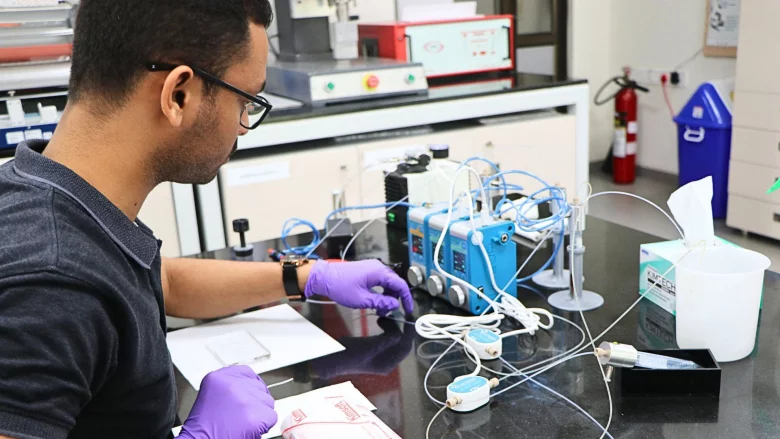

If you need fast, repeatable cell expansion with lower contamination risk and minimal cleaning burden, a wave bioreactor is often the most reliable option in the single-use toolbox. It was built for real manufacturing constraints: short timelines, multiple products, and culture processes that become highly complex when you scale beyond the laboratory. For teams who want a solution-oriented, tailor-made route to seed-train scale-up, inoculum preparation, or early clinical production, wave systems can deliver consistent performance without the infrastructure demands of large stainless vessels.
What Is a Wave Bioreactor?
A wave bioreactor (often called a rocking bioreactor) is a single-use bioreactor that mixes cell culture by gently rocking a flexible disposable bag on a heated, controlled platform. That rocking motion creates a travelling wave in the liquid, allowing the system to mix efficiently while keeping shear low.
Unlike a stirred tank bioreactor, there is no impeller to provide mechanical stirring. Instead, mixing intensity is controlled by process parameter settings such as rocking speed, rocking angle, and working volume. The culture vessel is typically a sterile, gamma-irradiated bag with ports, filters, and tubing, and—depending on the platform—single-use or external sensor options.
How a Wave Bioreactor Works
The working principle is simple, but the engineering detail matters when you want scalable, production-ready performance.
Mixing via the rocking process
As the platform rocks, the liquid rolls back and forth, forming a wave front that renews the liquid surface and improves bulk circulation. This is why wave systems are often chosen for shear-sensitive cultures: energy input is distributed through liquid motion rather than concentrated at an impeller tip.
In practical terms, wave mixing helps keep nutrients, gases, and cells more uniform across the bag. It is not designed to handle very high viscosities, but within its operating window it can provide efficient mixing with a high degree of repeatability.
Gas management and oxygen transfer
Most wave systems use headspace (overlay) gas control to manage oxygen and carbon dioxide; some designs also include spargers to increase gas transfer when required. Air and/or O₂ is delivered to support oxygen transfer, while CO₂ is often used to support pH control in mammalian systems. Because gas exchange is strongly linked to surface renewal, your working volume and rocking settings directly influence how much oxygen the culture can absorb—and how effectively CO₂ can be stripped.
Many platforms also provide dissolved oxygen monitoring so you can track oxygen limitation risk and tune gas composition or rocking settings accordingly. At higher density, oxygen demand and CO₂ accumulation can become the limiting constraints, so selecting a realistic operating window matters more than chasing theoretical maximums.
Temperature control
The rocking platform is typically heated, and temperature control is achieved through conduction to the bag plus control of the local environment. Because the bag has a high surface-area-to-volume ratio (especially at smaller scales), temperature control can be responsive—provided the system is correctly loaded and insulated and the culture medium is well distributed.
Monitoring and automation
Modern wave systems support closed operation with integrated monitoring and basic automation. Operators can monitor key variables, adjust rocking speed/angle, and manage gas flows through a controller. Many facilities also integrate real-time trending into their wider data environment to support investigations, optimisation, and deviation handling.
Core Components of a Wave Bioreactor System
While configurations vary, most wave bioreactor systems include:
- Rocking platform: provides controlled angle and speed (the core driver of mixing).
- Single-use bag: sterile culture chamber where the bag film is the product-contact surface (a critical consumable).
- Gas supply: controlled air/O₂/CO₂/N₂ delivery depending on the process.
- Heating and temperature control: platform heat plus temperature sensing.
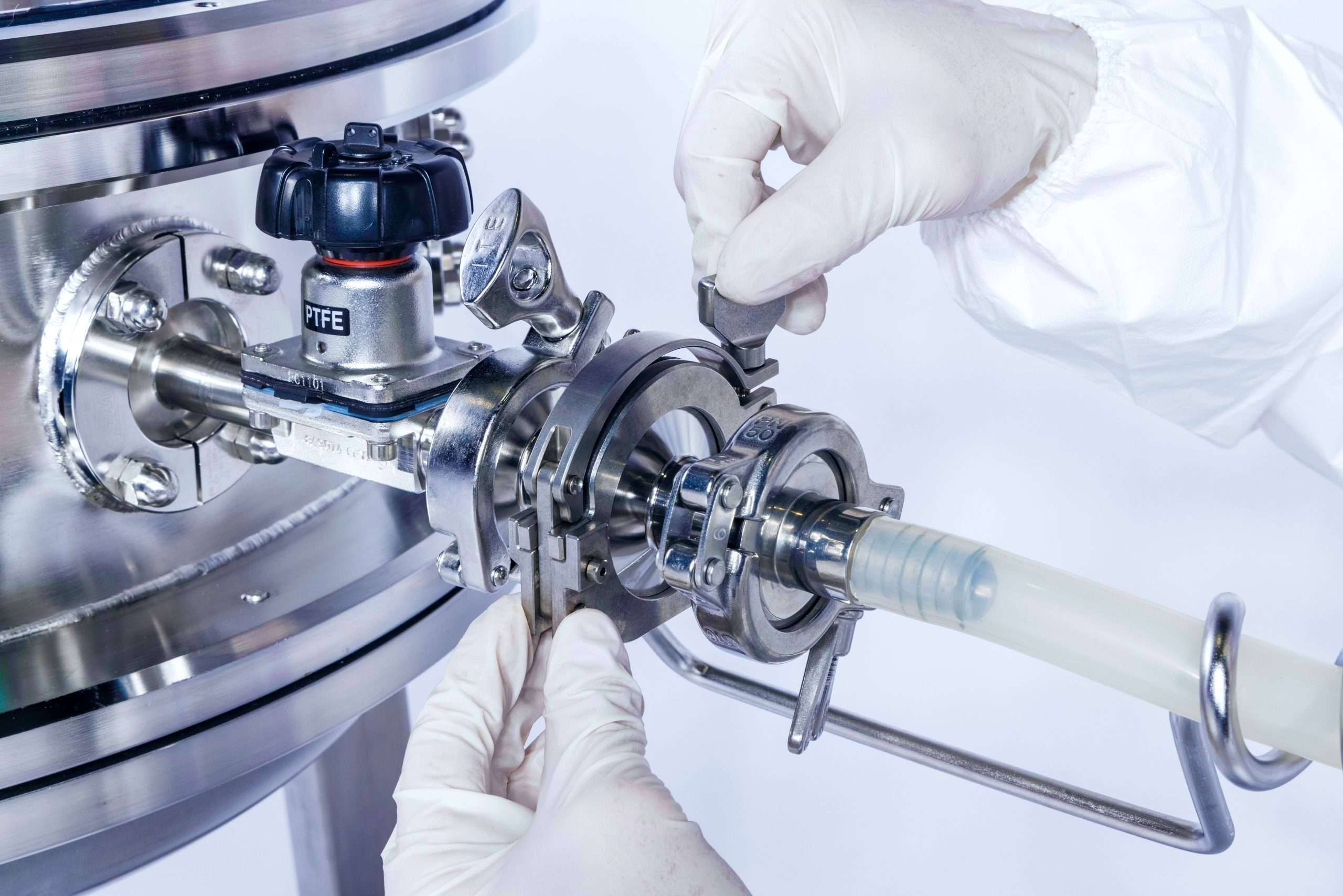
- Ports for additions and sampling: enabling inoculation, feeds, and sampling without opening the system.
In practice, this is what makes wave systems attractive: a closed, maintainable flow path with minimal cleaning burden.
Why Wave Bioreactors Are Used
Wave technology is widely adopted in bioprocessing because it solves practical scale-up problems early in the process train.
Rapid scale-up in the seed train
Many facilities use wave bioreactors to bridge the gap between shake flasks/spinner flasks and larger production vessels. They provide a controlled environment at intermediate volumes, improving consistency before transfer to a production reactor.
Gentle handling for sensitive cells
Wave bioreactors are commonly used for mammalian systems where cell viability is a major quality driver. This can include expansion of a defined cell line (for example, CHO for protein expression) as well as sensitive platforms used for stem cells (process-dependent). Keeping hydrodynamics gentle helps protect cells during growth and reduces stress-related drift.
Single-use flexibility
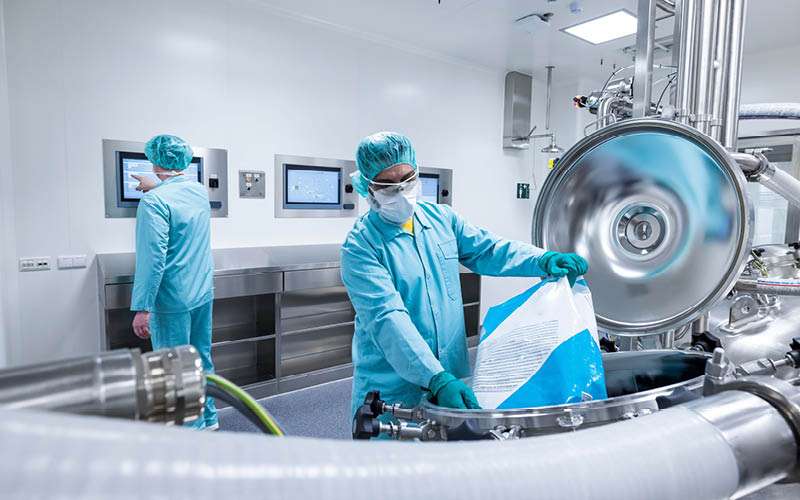
Single-use bags reduce cleaning and changeover time, which matters when you are running multiple products or frequent campaigns. They also help reduce cross-contamination risk associated with re-usable product-contact surfaces.
Advantages for Customers
- Fast deployment: single-use hardware can simplify facility requirements and shorten implementation timelines.
- Lower contamination risk: closed handling reduces exposure points during inoculation and routine interventions.
- Gentle hydrodynamics: low shear can support high cell viability in sensitive cultures.
- Flexible scale and footprint: wave systems support seed-train steps without large utility expansion.
- Simplified changeover: no CIP/SIP of product-contact surfaces; turnaround is typically faster.
Typical Applications
Wave bioreactors are most common where controlled, intermediate-scale cultivation is needed.
- Seed-train expansion for mammalian cell culture: building biomass before transferring to production.
- Biopharmaceutical upstream support: inoculum build for processes such as monoclonal antibody campaigns (the wave step is often used to build healthy cells before the main production bioreactor).
- Vaccine production and viral workflows (process-dependent): preparation steps where the oxygen and mixing window fits the process.
- Process development and scale-down models: rapid iteration with controlled parameters and single-use convenience.
- Selected microcarrier workflows: possible, but must be proven for the intended operating window.
Types and Configurations
Wave bioreactors are often distinguished by bag format, working range, and operating mode.
2D rocking bags
The classic wave configuration: a 2D bag on a rocking platform. These are widely used for seed train and early clinical manufacturing because they provide predictable mixing and straightforward handling.
Perfusion-capable wave set-ups
Some systems can be configured forperfusion or semi-continuous operation by integrating cell retention (for example, an external filter loop) and controlled feed/bleed. This can extend culture duration and increase total cell yield, effectively creating a perfusion culture environment where fresh nutrients are supplied while cells are retained.
This configuration can be powerful, but it is more operationally demanding than a straightforward fed-batch wave run.
Integrated, closed single-use skids
In more advanced installations, the wave unit becomes part of a closed upstream suite with sterile connectors, single-use sensors, and automated gas and feed control. Some suppliers (for example, Sartorius and others) offer systems and consumables designed to support this style of integration.
How Operating Modes Compare
A wave bioreactor can be used in different ways depending on the process goals:
- Fed-batch: common for seed-train expansion, where feeds are added to extend growth and maintain performance.
- Perfusion-style operation: used when longer runs or higher cumulative cell output are needed.
The right choice depends on oxygen/CO₂ limits, the target cell densities, and how you plan to transfer into the next vessel.
What to Watch Out For
Wave systems are excellent within the right operating window—but they are not universal.
Oxygen and CO₂ constraints at high density
At high cell densities or high oxygen demand, headspace-driven oxygen transfer can become limiting. You may need oxygen enrichment, process adjustments, or a different reactor format if the process consistently approaches transfer constraints.
CO₂ removal can also become challenging as density increases, affecting pH stability and culture performance. Gas strategy (flow rates and composition) and working volume selection are key levers.
Foam behaviour
Some media and processes foam readily. Foam control may require antifoam additions and careful tuning of rocking parameters and gas flows.
Single-use material considerations
Single-use systems introduce considerations around bag compatibility (extractables/leachables), film robustness, and supply continuity. A reliable implementation includes qualification, incoming checks, and a sensible consumable and spares strategy.
How to Choose the Right Wave Bioreactor
A practical, process-led checkpoint list helps you specify a wave system that works in production—not just on paper.
- Define the target use-case
- Seed-train expansion, inoculum build, or a production-adjacent step?
- Required working volume and transfer volume into the next vessel.
- Confirm culture requirements
- Organism type, shear sensitivity, and oxygen demand.
- Expected density and whether the process is likely to hit oxygen/CO₂ limits.
- Select bag format and working range
- Choose a bag that supports your target working volume with headroom for feeds.
- Confirm port configuration for inoculation, additions, and sampling.
- Plan gas strategy and control depth
- Air/O₂/CO₂/N₂ availability and control.
- Required monitoring set (pH/DO) and verification approach.
- Engineer operational reality
- Changeover rhythm, operator handling steps, and training.
- Waste handling for single-use components and storage conditions.
- Validate integration with the wider process
- Transfer strategy to the next bioreactor.
- Closed connections and sterile connector standards used on site.
Conclusion
A wave bioreactor is a single-use cultivation system that mixes by rocking a sterile bag to create gentle, effective circulation and gas exchange. It is widely used for seed-train expansion and early-stage manufacturing because it reduces cleaning burden, supports closed handling, and performs well for shear-sensitive cultures. The main limits are oxygen transfer and CO₂ management at higher densities, so the best results come from process-led sizing and conservative operating windows. When correctly specified, wave systems provide a reliable, flexible platform that accelerates scale-up without adding unnecessary complexity.