Process simulation allows engineering teams to evaluate whether process requirements, equipment concepts, utilities and operating strategies will work together before expensive design and procurement decisions are finalised.
As Indian biopharmaceutical manufacturers move beyond traditional vaccine production towards monoclonal antibodies, biosimilars, and cell and gene therapies, facility design is becoming significantly more complex. Engineering decisions made during early project phases increasingly determine whether a facility will achieve its production, cost and flexibility targets throughout its lifecycle.
The cost of getting those decisions wrong rises with every project phase. Changes to equipment sizing, utility requirements, piping layouts, or automation logic that surface during detailed design, commissioning, or qualification can have significant schedule and cost implications, particularly once procurement and construction are underway. For manufacturers investing in high-value biologics facilities, avoiding such late-stage changes has become an important project objective.
Yet facility projects are often discussed in terms of buildings, cleanrooms and qualification milestones, while facility performance depends on how well the process, equipment and support systems work together. A facility may meet its design capacity on paper, yet still struggle to achieve its target cost of goods due to bottlenecks in media preparation, buffer management, CIP/SIP operations, or shared utilities. Equipment should not merely fit the layout. It should fit the operating model.
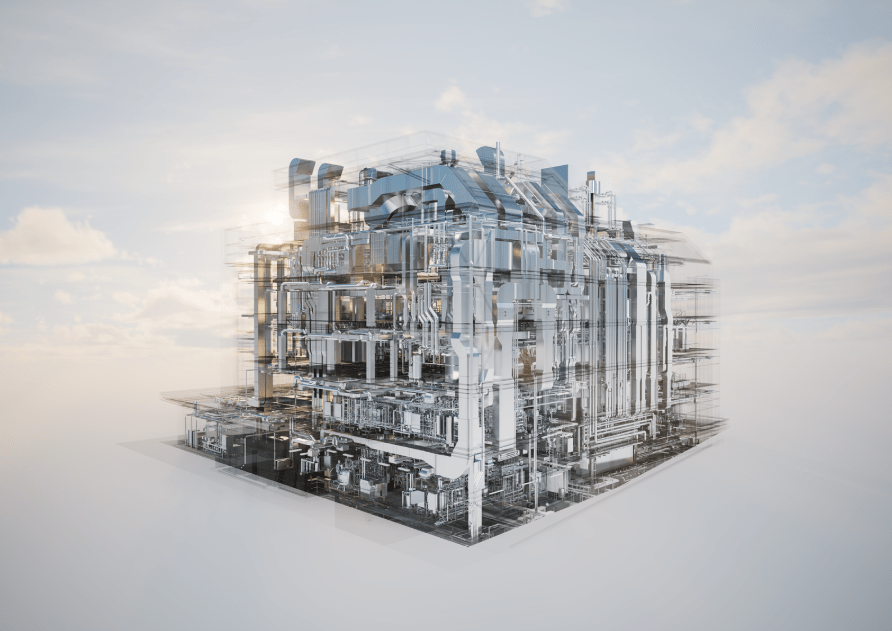
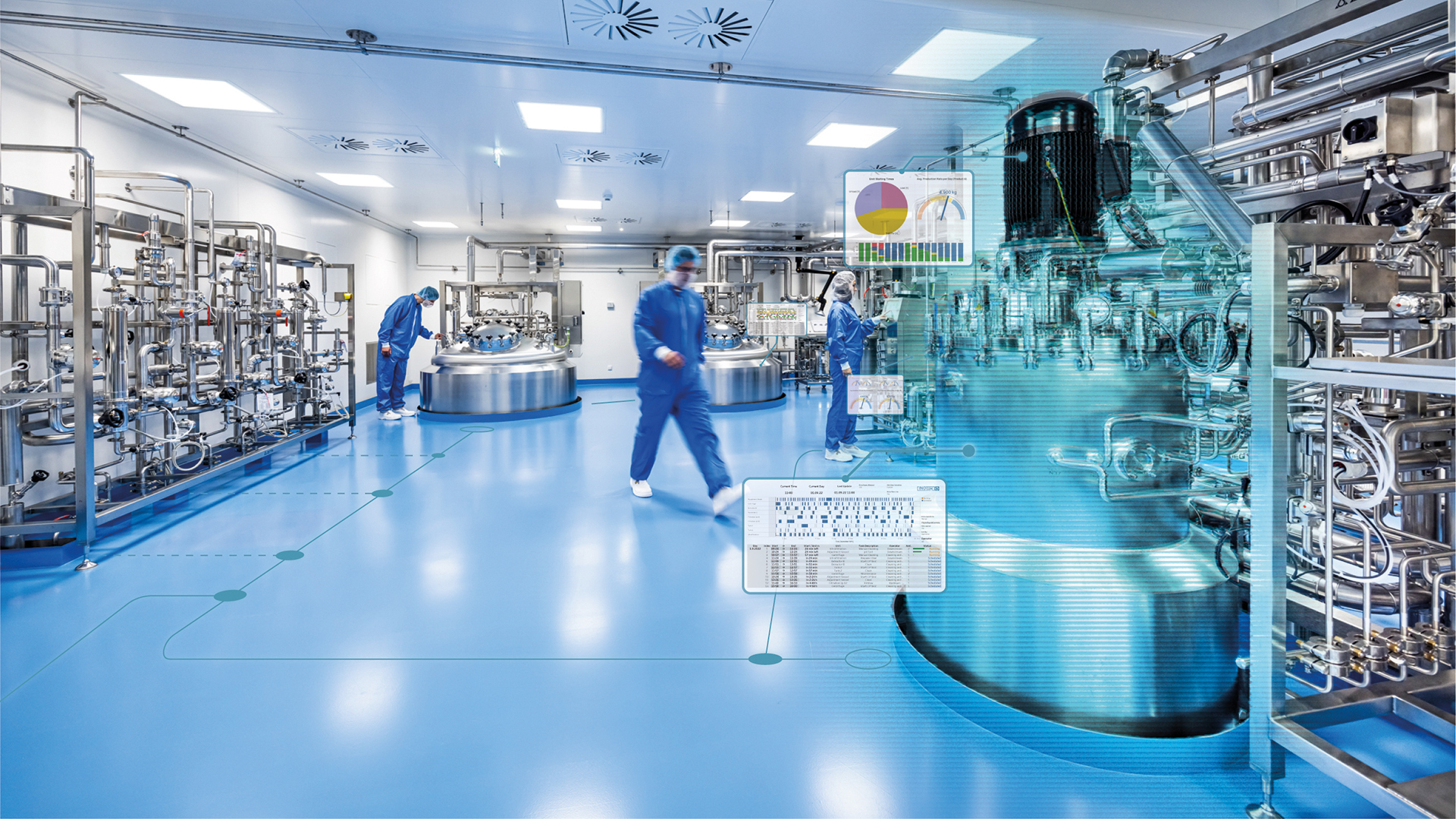
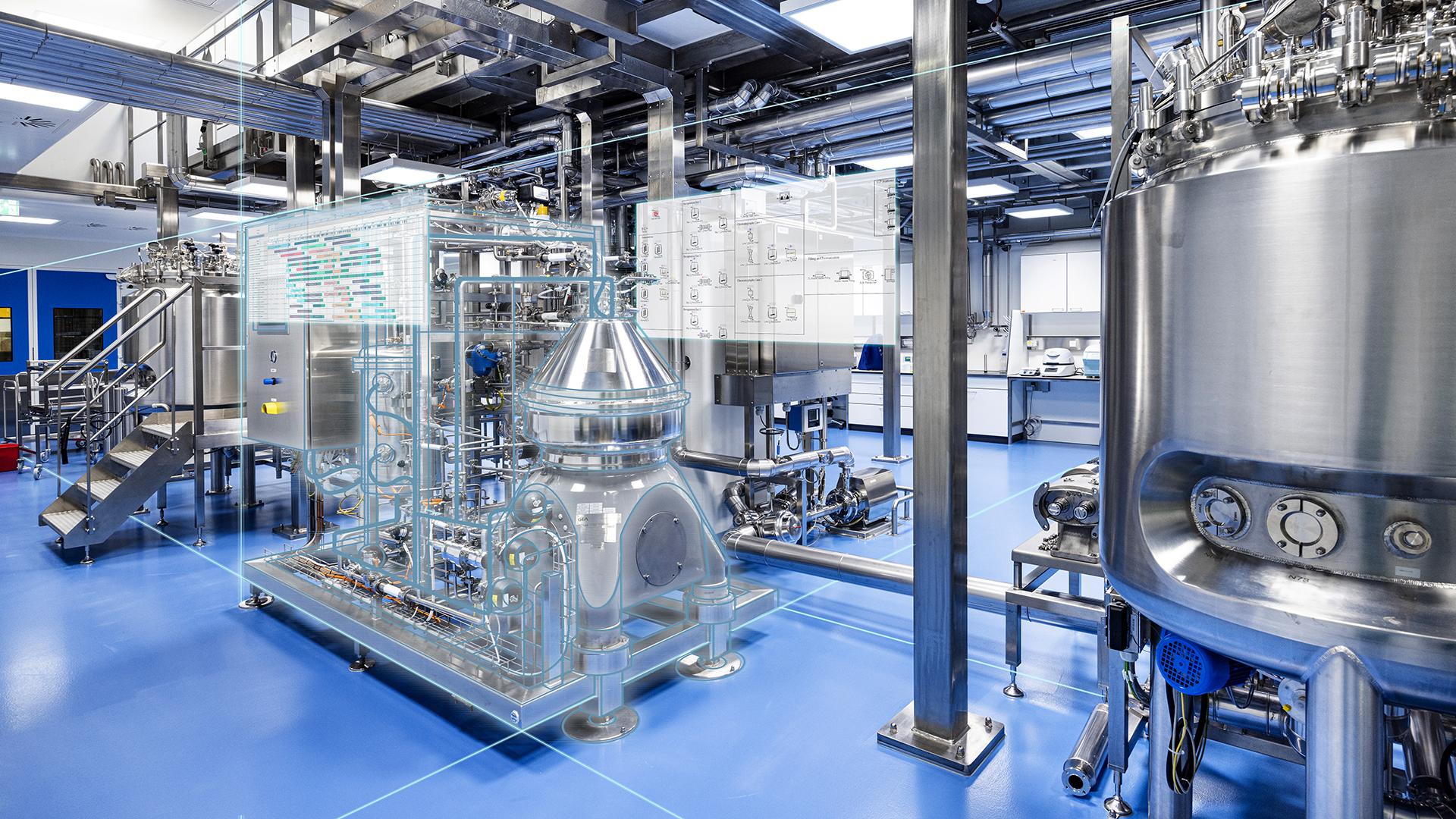
For engineering companies involved in process equipment, automation and facility design, simulation provides a common decision-making framework that aligns process requirements with equipment and infrastructure choices. Process simulation creates a digital representation of the proposed facility, linking recipes, batch schedules, equipment availability, cleaning sequences, material transfers, staffing and utilities. This allows the operating model to be tested before steel is cut, skids are fabricated, and piping routes are frozen. The same model can later form the basis for digital twin applications during operation.
What process simulation actually delivers
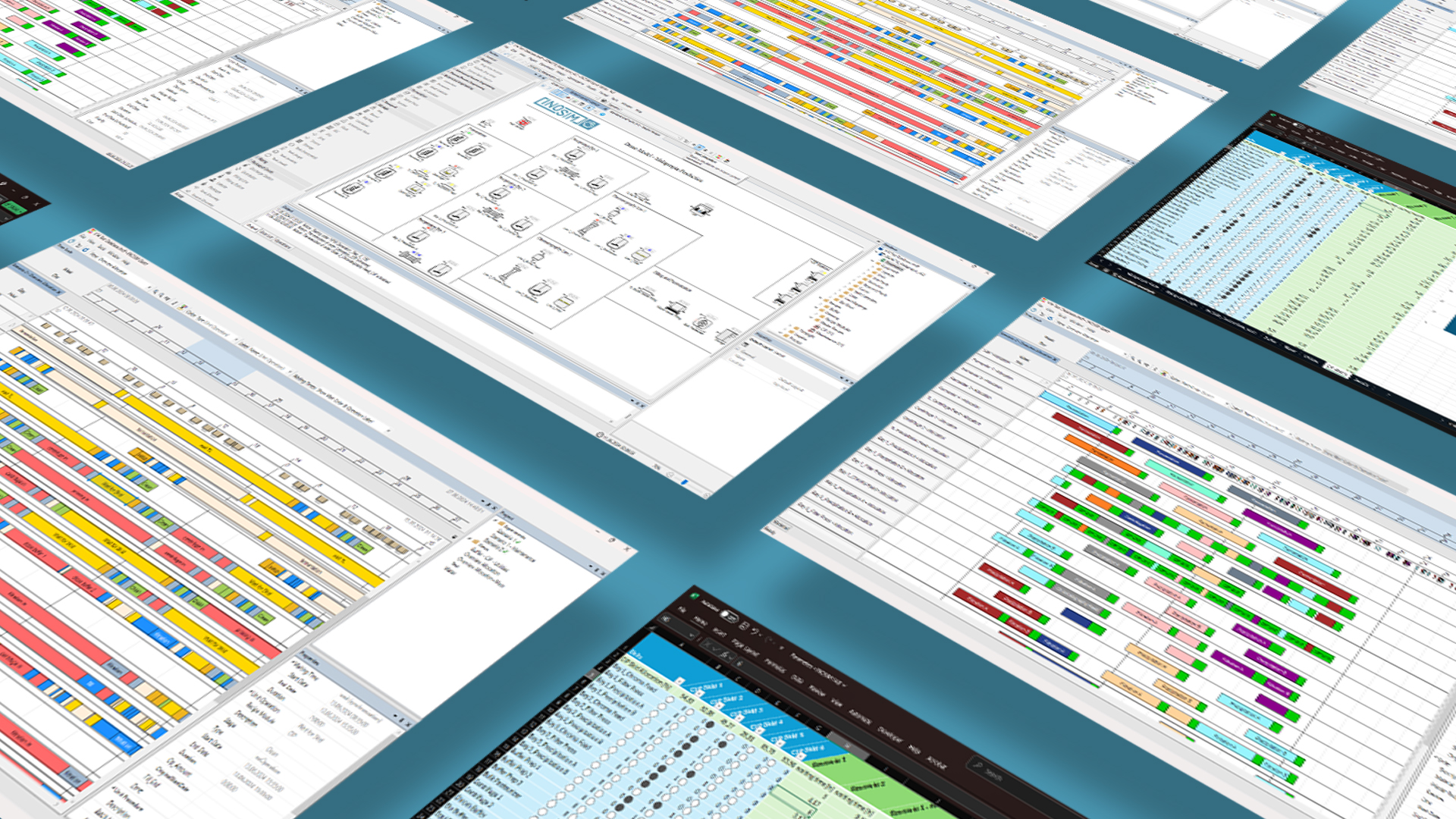
Production simulation is an event-driven material flow simulation. It depicts material flows, mass balances, resource utilisation, capacities and timing sequences across a facility’s operations, and produces a time-resolved picture of production: equipment occupancy plans in the form of Gantt charts, and media consumption over time.
Interpreted by experienced process engineers, these results provide decision support rather than design documents. They deliver performance predictions, capacity analysis, bottleneck identification and the evaluation of alternative scenarios. As Roland Maichin, Corporate Head of Project Development at ZETA, explains, “Even a small number of components which are all simple in themselves, can result in complex system behaviour when combined.” Simulation makes that behaviour visible early enough to act on it.
From equipment specification to system performance
Traditional equipment sizing is often based on parameters such as vessel volume, peak flow rates or nominal throughput. While these values are important, they do not determine how a facility will perform in practice. Actual production capacity depends on the interaction between upstream and downstream equipment, buffer preparation, cleaning operations, utilities, staffing and production scheduling.
Process simulation evaluates these interactions at the facility level. Instead of asking only “What size equipment is required?”, simulation helps answer a more relevant question: “How will this equipment perform within the complete manufacturing system?” A simulation study may reveal that increasing bioreactor volume provides little benefit if chromatography capacity, buffer preparation or utility availability becomes the true bottleneck. In such cases, the optimal solution may be a different equipment configuration, additional parallel capacity or a revised operating strategy. For the equipment partner, this reduces the risk of both over-specification and under-sizing.
Four major decisions that simulation can improve
- Equipment sizing and configuration: Test equipment combinations against realistic batches, changeovers, maintenance and cleaning, rather than relying only on theoretical utilisation.
- Utility and support-system demand: Examine when WFI, clean steam, HVAC, CIP/SIP and waste-handling loads peak, and whether equipment cycles compete for the same support capacity.
- Skid integration and material flow: Evaluate transfers among upstream, downstream, buffer, formulation and filling operations, including queues, staging and hold-time exposure.
- Modularity and expansion: Compare a large, fixed installation with modular skids, parallel units or phased capacity, while assessing how future lines will affect shared infrastructure.
What this looks like in practice
ZETA Group has applied production simulation across greenfield, brownfield and operating facilities. In each of the following projects, the main process remained unchanged; the savings came from understanding how the system behaves as a whole.
- Greenfield vaccine facility: For a multi-product vaccine plant at the concept design stage, ZETA mapped all 25 of the contract manufacturer’s products, including equipment failure scenarios. The analysis showed that the required capacity could be achieved with less equipment than originally assumed. Two vessels and a CIP skid were omitted, reducing CAPEX by more than four million euros.
- Brownfield plasma line: A new production line had to be integrated into an existing blood plasma processing site with limited space and existing media systems. A bottleneck analysis, followed by optimised concepts for buffer provision, WFI supply and CIP, meant that a buffer tank, a CIP skid and a WFI tank were no longer required. Savings exceeded five million euros.
- During commissioning: A plasma fractionation skid could not reach its predicted capacity because of split transfer lines. The apparent solution was an extensive mechanical expansion, with new pipelines and valves, automation changes, a longer shutdown and repeated qualification steps. Simulation identified a much simpler route: a single additional transfer line and a few software and process adaptations, saving the operator more than ten million euros.
In a further capacity expansion at a four-line plasma fractionation facility, simulation showed that three process units would approach full occupancy in the new operating scenario, leaving no room for minor deviations such as valve failures. Shortening a pre-cleaning step from 2.5 hours to 1 hour by supplying more WFI, which the simulation confirmed the loop could deliver, relieved the constraint. Critical delays caused by WFI system sanitisation were eliminated entirely through changes made within its validation boundaries.
Why the equipment partner should be involved early
When machinery suppliers enter only after the layout and user requirements are substantially fixed, much of their knowledge is reduced to a compliance response. Involving the equipment partner during concept and basic design allows proven operating data, cleaning requirements, maintenance access, automation philosophy and scale-up constraints to inform the facility model.
Through its process engineering expertise and access to INOSIM simulation technologies within the ZETA Group, ZETA India supports customers in evaluating facility concepts before detailed design begins. This combines local project understanding in India with simulation experience gained on biopharma and plasma facilities internationally.
Questions engineering teams and equipment partners should answer together
- Can the proposed equipment train deliver the annual production plan after cleaning, maintenance, sampling and quality-related delays are included?
- Which shared asset or utility becomes constrained first when multiple batches overlap?
- Are vessel sizes, skid capacities and transfer rates aligned with the complete recipe rather than isolated unit operations?
- Does the layout provide enough access for operation, cleaning, maintenance and future replacement?
- Can the facility absorb a new product, higher titre or additional shift without disproportionate capital expenditure?
From design decisions to lifecycle performance
The value of simulation does not end at design approval. The simulation architecture is built in layers around the core process, with buffer handling, CIP, utilities and piping added as further layers. This modular structure allows the same model to be extended as the project progresses. During commissioning and ramp-up, it supports troubleshooting, scheduling and debottlenecking, as the commissioning example above shows. For operating plants, it helps evaluate a new product, an additional campaign or a capacity expansion without disrupting production. Simulation also helps bring predictability to day-to-day production runs.
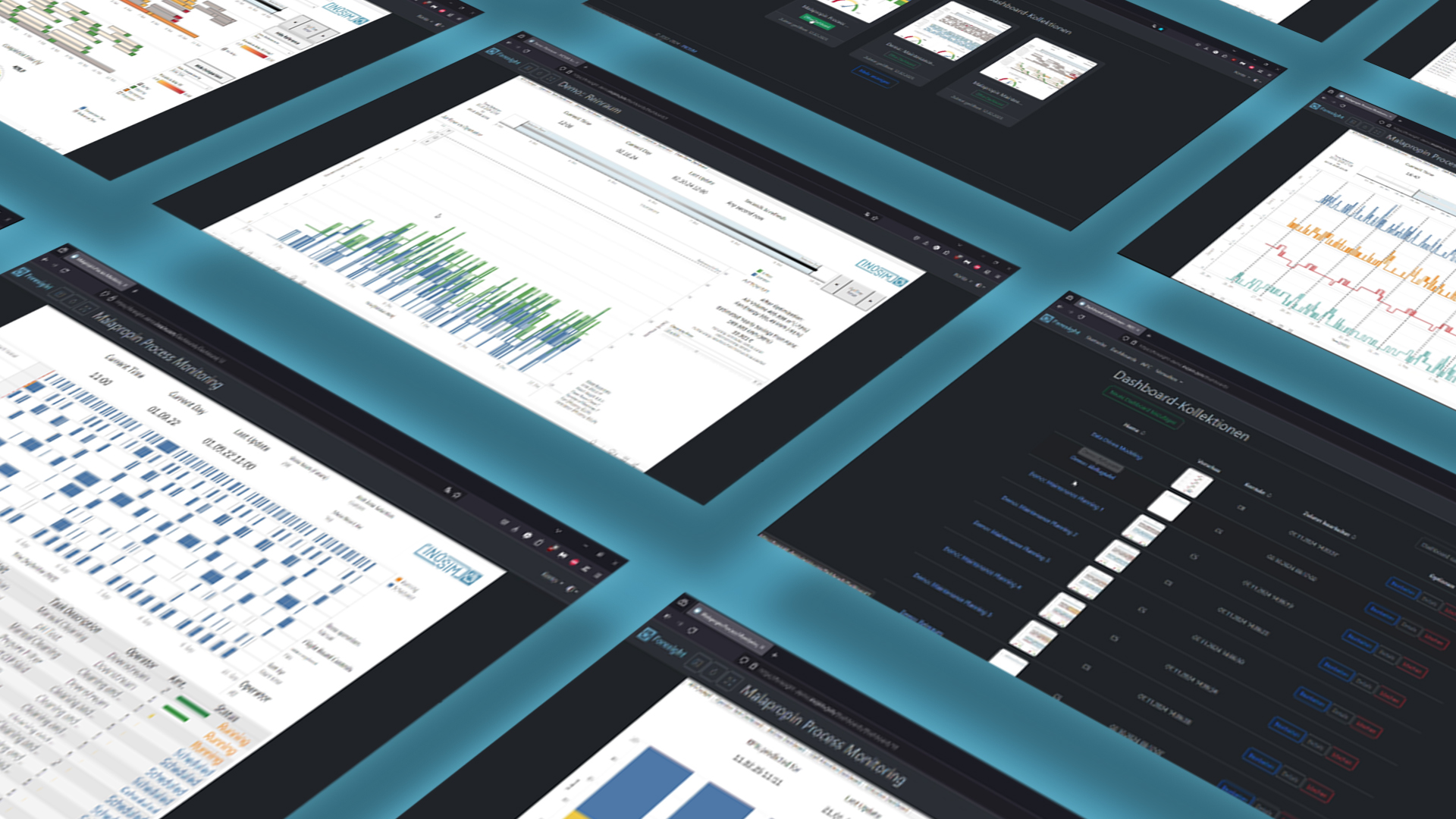
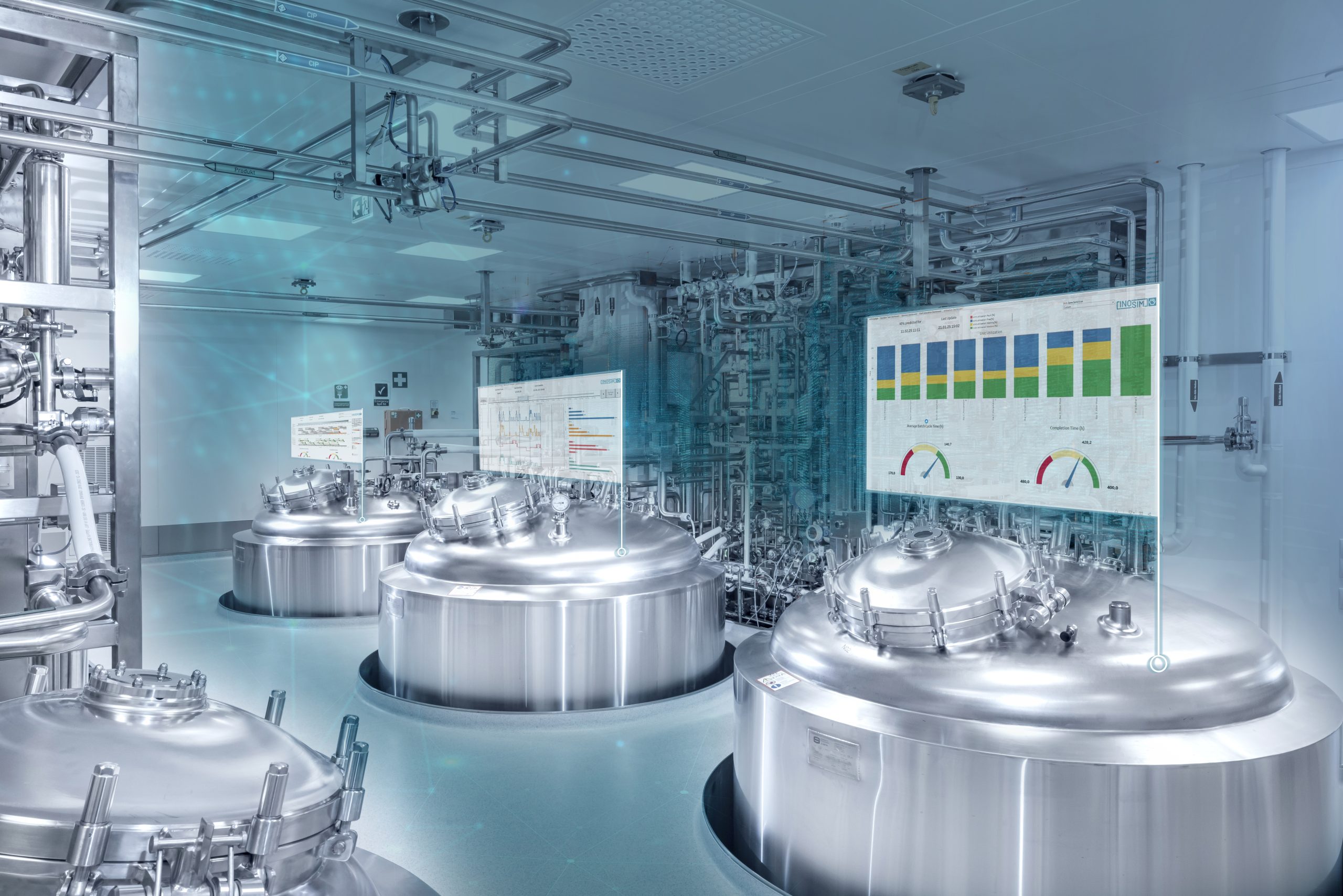
Once the model connects to live plant data from systems such as MES and the process control system, it becomes the basis for an operational digital twin. INOSIM Foresight, our software for predictive production management, uses this link for predictive production planning, showing teams where they stand against the plan and supporting re-planning when equipment downtime or process delays occur. In real-world projects, this has increased production capacity by around 10–15% simply by avoiding inefficient planning.
For engineering and machinery partners, this marks a shift from supplying a standalone asset to supporting performance across the facility’s lifecycle: design assurance, integration, commissioning support, operating optimisation and future capacity planning. In a market where equipment is expected to remain productive for many years, this capability can be as important as the mechanical specification itself.